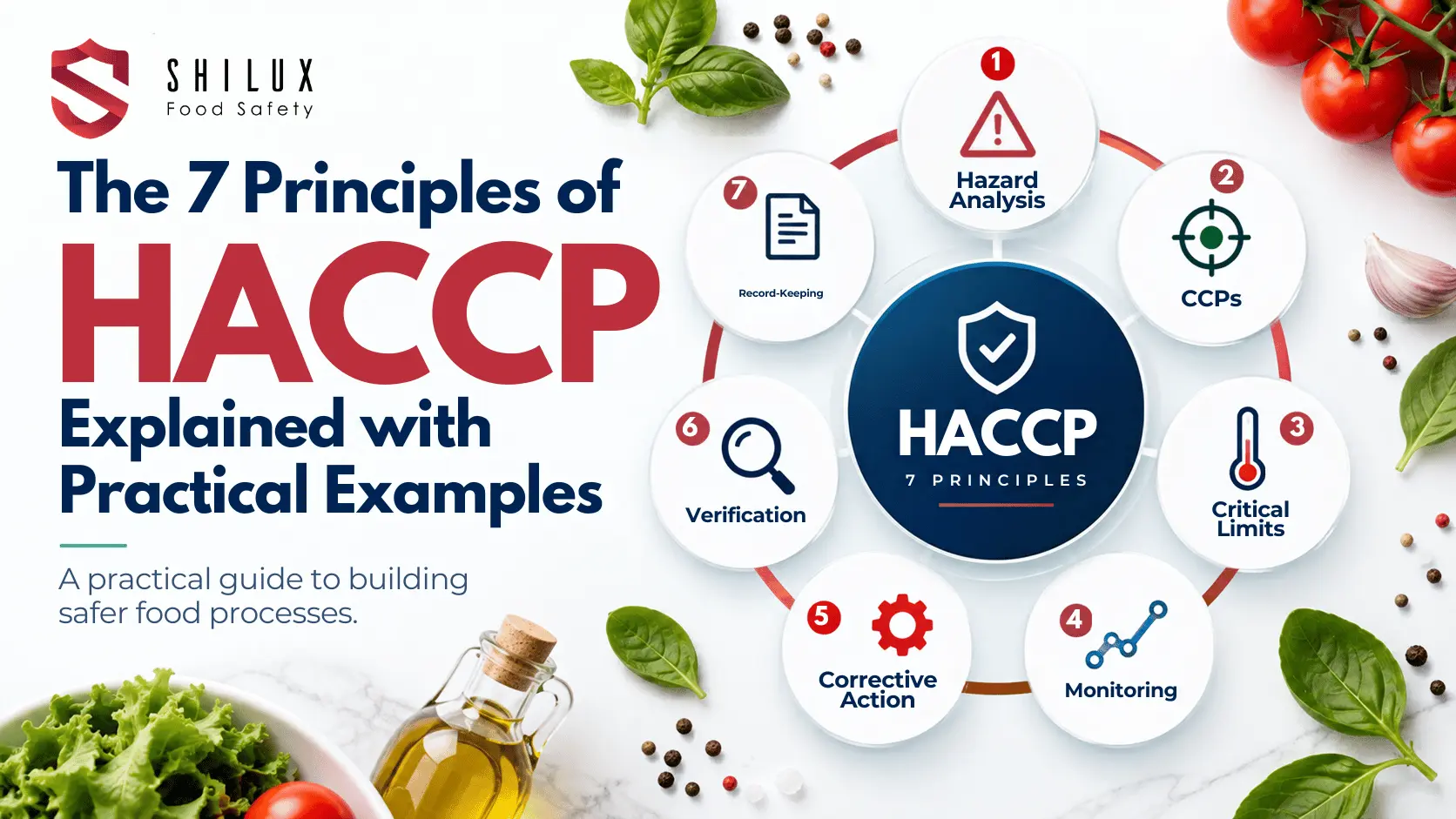
Understanding the 7 Principles of HACCP in the South African Context
In the South African food industry, whether you are running a high-throughput poultry abattoir in Gauteng or a boutique bakery in the Western Cape, food safety is governed by strict regulations. Central to this is the 7 principles of HACCP (Hazard Analysis and Critical Control Point). Originally developed to ensure safe food for astronauts, these principles now form the backbone of the South African food safety regulations, specifically through the Department of Health's R.638 and the voluntary but highly regarded SANS 10330 standard.
HACCP is not a one-size-fits-all checklist; it is a systematic approach to identifying, evaluating, and controlling food safety hazards. By focusing on prevention rather than end-product testing, businesses can significantly reduce the risk of foodborne illnesses and costly food recalls. In this guide, we will break down each principle with practical, local examples to help you move from theory to audit-readiness.
Principle 1: Conduct a Hazard Analysis
The first step is to identify any biological, chemical, or physical hazards that could cause harm to the consumer. This isn't just a brainstorming session; it requires a deep dive into every step of your process, from receiving raw materials to dispatch.
Practical Example: A meat processing facility in Johannesburg identifies that raw beef trimmings may contain Salmonella or E. coli (Biological Hazard). They also identify the risk of metal fragments from a worn-out mincer (Physical Hazard) and potential allergen cross-contamination from spices (Chemical Hazard).
To effectively conduct this, you must first ensure your prerequisite programmes (PRPs) like cleaning and sanitation are robust. Without these, your hazard analysis will be overwhelmed by manageable risks.
Principle 2: Determine Critical Control Points (CCPs)
A CCP is a step in the process where control can be applied and is essential to prevent or eliminate a food safety hazard or reduce it to an acceptable level. Not every hazard requires a CCP; many are managed through Good Manufacturing Practices (GMPs).
A common mistake is labelling every step a CCP. Use a decision tree to determine if the step is truly critical.
Practical Example: In a dairy processing plant, pasteurisation is a CCP because it is the specific step designed to kill pathogens. However, the receiving of raw milk is often managed via PRPs and supplier quality assurance.
Principle 3: Establish Critical Limits
For every CCP, you must establish a maximum or minimum value to which a hazard must be controlled. These limits must be science-based. In South Africa, these often align with R.638 regulations or specific industry standards.
Practical Example: For a cooked chicken producer, the critical limit at the cooking step (CCP) might be a core temperature of 75°C for at least 2 minutes. Anything less is a failure, as it does not guarantee the destruction of pathogens.
Principle 4: Establish Monitoring Procedures
Monitoring is the act of conducting planned observations or measurements to assess whether a CCP is under control. It provides the "data trail" needed for internal audits and regulatory inspections.
- What: Temperature, time, pH, or visual checks.
- How: Calibrated thermometers, automated sensors, or checklists.
- Frequency: Continuous (ideally) or at set intervals.
- Who: A trained operator on the line.
Principle 5: Establish Corrective Actions
When monitoring shows that a critical limit has been breached, you must have a pre-defined plan. This involves two parts: fixing the immediate problem and identifying the root cause to prevent recurrence. Understanding the difference between correction and corrective action is vital here.
Practical Example: If a batch of milk fails to reach pasteurisation temperature, the correction might be to divert the milk for reprocessing or disposal. The corrective action would involve investigating why the boiler failed and implementing a new maintenance schedule.
Principle 6: Establish Verification Procedures
Verification confirms that the HACCP system is working according to the plan. It’s the "check on the checker." This includes reviewing records, observing monitoring activities, and conducting HACCP verification and validation exercises.
| Activity | Purpose | Frequency |
|---|---|---|
| Thermometer Calibration | Ensure monitoring accuracy | Monthly/Quarterly |
| Microbiological Testing | Verify CCP effectiveness | Weekly/Batch-wise |
| Internal Audit | Check system compliance | Bi-annually |
Principle 7: Establish Record-Keeping and Documentation
If it isn't written down, it didn't happen. Documentation is the only way to prove to an Environmental Health Practitioner (EHP) or a GFSI auditor that your HACCP plan is active. This includes the hazard analysis, CCP determinations, and all monitoring logs.
Implementing the 7 Principles of HACCP: A Checklist
- [ ] Assemble a multidisciplinary HACCP team.
- [ ] Describe the product and its intended use (e.g., ready-to-eat vs. requires cooking).
- [ ] Construct and confirm a flow diagram of the process.
- [ ] List all hazards and identify control measures.
- [ ] Apply the CCP decision tree.
- [ ] Document critical limits based on SANS 10330 or R.638.
- [ ] Train staff on monitoring and corrective action procedures.
For businesses aiming for international markets, aligning these principles with FSSC 22000 or ISO 22000 is the logical next step. These standards take the 7 principles and wrap them in a management system that focuses on continuous improvement and leadership commitment.
Maintaining a HACCP system requires ongoing effort. Whether you are preparing for a Certificate of Acceptability inspection or a rigorous third-party audit, the 7 principles of HACCP remain your most effective tool for ensuring consumer safety and business longevity.
Building a robust system can be daunting, but you don't have to do it alone. Expert guidance ensures that your hazard analysis is exhaustive and your CCPs are practical for your specific operation. Book a consultation with Shilux today to ensure your facility meets both local regulations and international benchmarks.