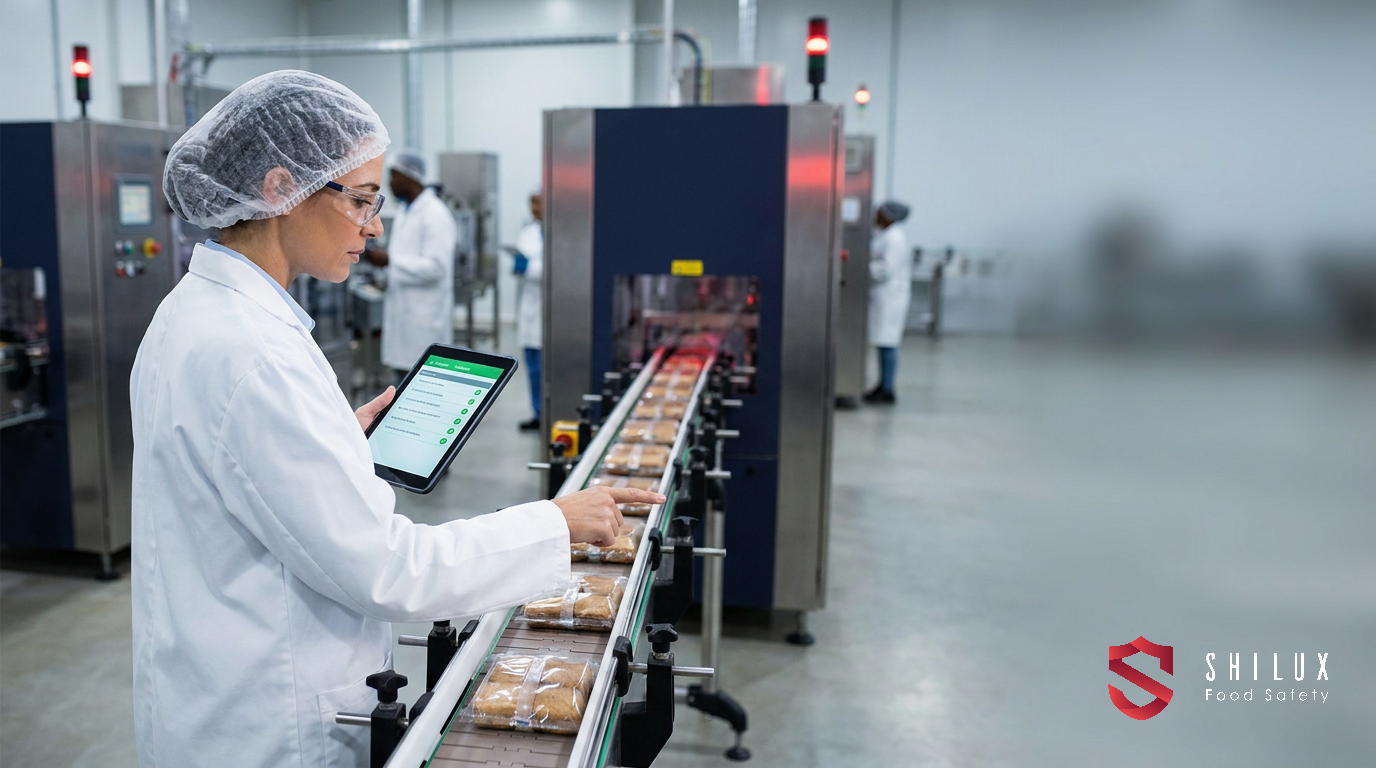
Food labelling errors are among the most common causes of food recalls and withdrawals in South Africa, frequently stemming from undeclared allergens, incorrect date formatting, or mismatches between packaging and product. These failures occur when internal verification processes fail to catch discrepancies between the approved master artwork and the physical label applied on the production line, often resulting in significant financial loss and legal liability under the Foodstuffs, Cosmetics and Disinfectants Act 54 of 1972.
Key Takeaways
- Undeclared allergens are among the most common and most serious reasons for food recalls.
- Compliance with R.146 (Regulations Relating to the Labelling and Advertising of Foodstuffs) is a legal mandate, not an optional certification.
- The distinction between a product withdrawal and a food recall depends on whether the product has reached the end consumer.
- Verification at the point of packaging (Line Clearance) is the most critical control point for preventing labelling errors.
- Digital systems can significantly reduce human error compared to manual paper-based logs.
The High Cost of Labelling Non-Compliance
In the South African regulatory landscape, labelling is governed primarily by the Foodstuffs, Cosmetics and Disinfectants Act (Act 54 of 1972) and its specific regulation, R.146. While many manufacturers focus their HACCP plans on physical, chemical, and biological hazards, labelling errors are a frequent "hidden" hazard. When a product contains an allergen not listed on the label, it transitions from a simple administrative error to a high-risk safety incident.
Manufacturers must understand the difference between a market withdrawal (removing product from the distribution chain before it reaches consumers) and a recall (reclaiming product from consumers). A recall is significantly more expensive, involving public notifications, reverse logistics, and potential brand damage that can take years to repair.
1. Undeclared Allergens: The Leading Cause of Recalls
The most dangerous labelling error is the failure to declare one of the common allergens listed in R.146 (e.g., egg, milk, soy, wheat/gluten, peanuts, tree nuts, fish, and crustaceans). This often occurs not because the manufacturer intended to hide the ingredient, but due to lack of communication during formulation changes or "packaging swaps" where a product is accidentally placed in a similar-looking bag for a different variant.
Root Causes in the Factory
- Ingredient Changes: A supplier changes their sub-ingredient list (e.g., changing a spice blend that now contains soy), and the QA team is not notified to update the final product label.
- Cross-Contact Issues: Failure to include a "May Contain" statement when a hazard analysis shows that cross-contact cannot be reliably prevented on shared equipment.
- Packaging Mismatches: Placing a "Dairy-Free" product in a standard pack that lists milk as an ingredient, or vice versa.
2. Incorrect Date Coding and Batch Traceability
Under R.638 hygiene requirements and GFSI-benchmarked standards like FSSC 22000, every product must be traceable. Labelling errors often involve the date printer (inkjet or thermal transfer) failing or being set incorrectly.
Common errors include illegible "Best Before" dates, incorrect year settings (e.g., printing 2023 instead of 2024), or batch codes that do not match the production records. If a manufacturer cannot prove which products were made on a specific day due to a coding error, they may be forced to recall a much larger volume of product than necessary to mitigate risk.
The Role of Traceability
Effective lot traceability relies on the label being the "source of truth." If the label code is missing or wrong, the entire food traceability system collapses during a crisis. During a mock recall, one of the first things auditors check is if the physical labels on the shelf match the batch production records.
3. Non-Compliant Layouts and R.146 Technicalities
South African law is very specific about how information is displayed. Common technical errors that lead to regulatory findings or withdrawals include:
- Minimum Letter Size: R.146 specifies minimum heights for mandatory information. If the font is too small (often to save space for marketing), the product is legally non-compliant.
- Language Requirements: Mandatory information must be in English and at least one other official language where necessary, though English is the standard for most commercial labelling.
- Nutritional Table Formatting: Using the wrong format for the nutritional information table or making unsubstantiated health claims (e.g., "High in Protein") without meeting the minimum thresholds defined in the regulations.
Comparison: Withdrawal vs. Recall Scenarios
| Error Type | Typical Action | Risk Level | Primary Cause |
|---|---|---|---|
| Omitted Allergen (Milk) | Consumer-level recall | Critical (Life-threatening) | Formulation change not updated on label |
| Wrong Best Before Date | Withdrawal | Low (Quality/Regulatory) | Printer setup error at start of shift |
| Missing Batch Code | Withdrawal | Medium (Traceability failure) | Inkjet failure during production run |
| Non-compliant Font Size | Regulatory Correction | Low (Administrative) | Poor artwork design/approval process |
Preventative Measures: The Labelling Checklist
To prevent these errors, QA managers should implement a robust verification process. Relying on the printer operator's memory is a significant risk. Instead, a formal audit-ready checklist should be used at every shift change and packaging changeover.
Operational Checklist for Labelling Integrity
- Artwork Approval: Has the final artwork been signed off by a regulatory expert against R.146 and the current HACCP plan?
- Line Clearance: Before starting a new run, are all labels and packaging from the previous run removed from the area?
- First-Off Inspection: Does the first finished pack of the shift match the Master Sample exactly? Check the allergen list, the date format, and the placement.
- Printer Verification: Is the date code legible? Does it rub off easily? Is the batch number sequential and correct?
- Hourly Checks: Are random samples pulled every hour to ensure the printer hasn't drifted or run out of ink?
The Digital Advantage in Labelling Compliance
Many South African manufacturers still use paper logs for line clearance and labelling checks. The danger here is "pro-forma" ticking—operators ticking boxes without actually looking at the label. Digital quality management systems, like QMSURE, can require photographic evidence of the label to be uploaded during the check, ensuring that the verification actually took place. Furthermore, digital systems can link the approved supplier list and ingredient specifications directly to the labelling requirements, ensuring that if a supplier changes an allergen profile, a flag is raised immediately.
Root Cause Analysis After a Labelling Incident
If a labelling error is discovered, it is not enough to simply relabel the product. Manufacturers must perform a root cause analysis to understand why the system failed. Was it a lack of training? Was it a breakdown in the supplier management process? Or was it a technical failure of the coding equipment?
In many cases, the root cause is a "culture of speed" where production targets override the time needed for proper line clearance. Addressing this requires a shift in food safety culture, where every employee understands that an incorrect label is just as dangerous as a contaminated product.
Regulatory Enforcement in South Africa
The National Department of Health and local Environmental Health Practitioners (EHPs) have the authority to seize non-compliant foodstuffs. If you are preparing for a food premises inspection, expect the EHP to scrutinise your labels against your Certificate of Acceptability (COA) conditions. Failure to comply can lead to fines, the loss of your COA, and a total halt in production.
Conclusion
Labelling is the final line of defence between your facility and the consumer. By treating the label as a critical component of food safety—rather than just a packaging requirement—manufacturers can avoid the devastating costs of recalls. Robust line clearance, formal artwork approval, and the adoption of digital verification tools are the most effective ways to ensure that what is inside the package matches what is printed on the outside.
Ensuring labelling compliance requires a combination of technical knowledge and operational discipline. Shilux provides comprehensive regulatory compliance consulting and specialised food safety training to help manufacturers master R.146 requirements. For businesses looking to eliminate paper-based errors, our QMSURE paperless system offers automated traceability and real-time quality verification to protect your brand from the risks of a recall.