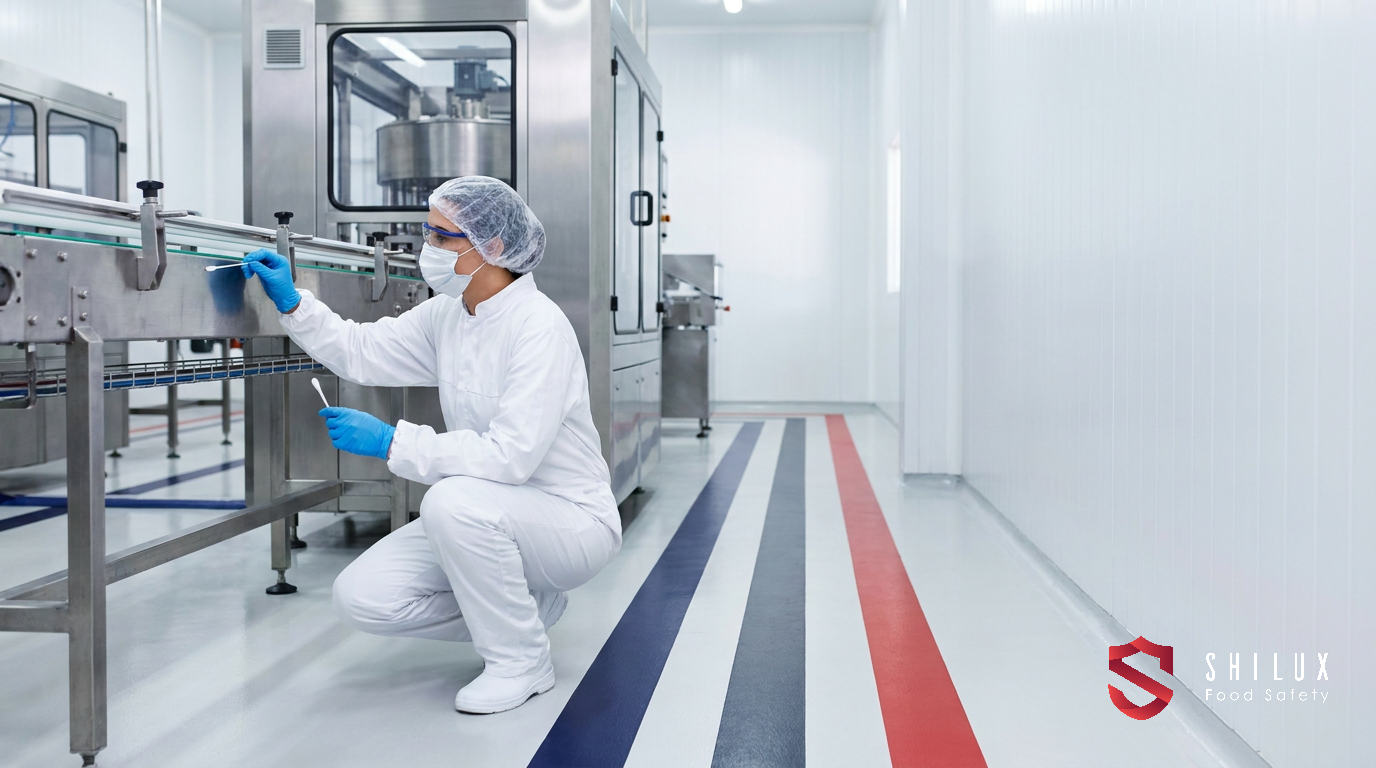
The Foundation of High-Risk Food Safety
To strengthen your Prerequisite Programme (PRP) in high-risk areas, you must transition from generic Good Manufacturing Practices (GMP) to site-specific, high-care operational controls that focus on physical segregation, stringent hygiene barriers, and environmental monitoring. Effective PRP management requires a shift from passive documentation to active behavioural verification and engineering controls that prevent the introduction of pathogens like Listeria monocytogenes and Salmonella into ready-to-eat (RTE) zones.
Key Takeaways
- Regulatory Compliance: PRPs are a mandatory legal requirement under R.638 (Section 10) for any facility holding a Certificate of Acceptability.
- Physical Segregation: High-risk zones require dedicated equipment, PPE, and controlled access to eliminate cross-contamination.
- Validation is Critical: Cleaning protocols in high-risk areas must be validated via swabbing and testing, not just visual inspection.
- Beyond HACCP: A strong PRP programme reduces the burden on your HACCP plan by managing hazards at the foundational level.
- Documentation: Moving to digital systems like QMSURE helps maintain the real-time visibility required for GFSI-level compliance.
Understanding PRPs in the South African Context
In South Africa, the legal framework for food safety starts with the Foodstuffs, Cosmetics and Disinfectants Act 54 of 1972. Specifically, the R.638 Regulations Governing General Hygiene Requirements for Food Premises mandate that every food manufacturer maintains a clean and protected environment. While R.638 provides the minimum legal baseline, international standards like FSSC 22000 and ISO 22000 demand more robust prerequisite programmes to manage the operational environment.
For a manufacturer in Johannesburg or Cape Town, a generic PRP manual is no longer sufficient for passing a GFSI audit or a Department of Health inspection. High-risk areas—those where food is susceptible to microbiological growth and is ready to eat—demand specialized attention to infrastructure, personnel flow, and sanitation. This is particularly relevant in the South African meat and poultry sector, where post-lethality exposure to the environment must be strictly controlled to prevent Listeria contamination.
1. Physical Segregation and Zonation
The most common failure in high-risk PRPs is the lack of true physical segregation. If your raw meat handlers and your cooked product packers share a locker room or a single hand-wash station without a physical barrier, your PRP has already failed.
Infrastructure and Flow
High-risk areas should ideally operate under positive air pressure to prevent the ingress of airborne contaminants. In your facility layout, ensure that the "High-Care" or "High-Risk" zone is a restricted area. This includes:
- Changing Rooms: Use a two-stage changing process. Staff should remove factory-wide PPE and don zone-specific, colour-coded PPE (e.g., red aprons for raw, blue for cooked). This is a critical step in food premises requirements.
- Tool Control: Maintenance tools must be dedicated to the high-risk area. A spanner used on a raw-side conveyor should never enter the high-risk zone without full sterilisation. Shadows boards should be used to ensure tools do not leave their designated zones.
- Drainage: Drains should flow from high-risk to low-risk areas, never the other way around. In many South African facilities, back-flow during heavy rains or cleaning cycles is a major common food safety audit finding.
2. Cleaning and Sanitation Validation
In a standard GMP audit, "clean to the eye" might suffice for a warehouse. In a high-risk production room, it is meaningless. Strengthening your PRP here means moving toward validation and verification of cleaning protocols. Validation proves the method works; verification proves the method was followed on a specific day.
Every cleaning procedure (SOP) for high-risk equipment must be validated to prove it actually removes the target pathogen. This involves initial intensive microbial testing. Once validated, daily verification (ATP swabbing or protein swabs) ensures the SOP was followed correctly. Failure to distinguish between these two is one of the most common CAPA mistakes during post-audit rectifications.
Example: High-Risk Cleaning Checklist
| Action Item | Standard Requirement | High-Risk Enhanced Control | Audit Evidence Required |
|---|---|---|---|
| Personnel Hygiene | Hand wash before entry. | Timed 20-second scrub, alcohol sanitiser, and gloved hand sanitation. | CCTV review or supervisor observation logs. |
| Equipment Cleaning | Cleaned at end of shift. | Full strip-down, deep clean, and pre-operational ATP verification. | ATP meter printouts and verification logs. |
| Environmental Monitoring | Monthly air plates. | Weekly Listeria swabbing of non-contact surfaces (drains, wheels). | Trend analysis reports and lab certificates. |
| Waste Management | Lidded bins emptied daily. | Dedicated bins with foot-pedals, removed via one-way airlocks. | Cleaning logs for the waste bins themselves. |
3. Personnel Behaviour and Food Safety Culture
You can have the best stainless steel facility in South Africa, but if your operators do not understand why they cannot cross the "red line" on the floor, your PRP is weak. Strengthening PRPs in high-risk areas requires a deep investment in food safety culture. This involves moving beyond a "blame culture" to one where staff feel empowered to stop the line if they spot a hygiene breach.
Audit behaviour, not just paperwork. During internal audits, observe if staff are following the correct sequence for donning PPE. Do they sanitise their hands after touching their masks? In high-risk areas, these "minor" lapses are the root causes of major food recalls. Using a food safety culture questionnaire can help identify if staff only follow rules when supervisors are watching.
4. Supplier and Raw Material Management
A high-risk area is only as safe as the ingredients entering it. If you are processing ready-to-eat salads, your supplier's irrigation water quality is a critical PRP component. Strengthening your supplier management involves moving beyond just collecting COAs (Certificates of Analysis).
For high-risk raw materials, you must perform risk-based supplier audits to ensure their own PRPs are functioning. If a supplier fails to manage their environmental pathogens, they are exporting their risk directly into your high-care zone. You should maintain a live approved supplier list that is updated based on performance, not just administrative expiry dates. In cases of economically motivated adulteration, high-risk ingredients are often the prime targets, necessitating a robust food fraud vulnerability assessment.
5. Documentation and the Move to Digital
South African food manufacturers often struggle with "paperwork fatigue." In high-risk areas, the volume of monitoring logs—temperature checks, chlorine concentrations, footbath titrations—is immense. Paper logs are prone to "dry-labbing" (filling in results at the end of the day) and are difficult to trend, which is a major hurdle for QMSURE implementations.
Strengthening your PRP involves digitising these records. Using a system like QMSURE allows for real-time alerts. If a footbath concentration falls below the required ppm, the system can alert the QA Manager immediately, rather than discovering the error during a monthly file review. This is the difference between proactive food safety and reactive crisis management. Digital systems also simplify product traceability, which is essential when responding to a food recall event.
6. Maintenance for Food Safety
Maintenance staff are frequently the unintended vectors of contamination in high-risk zones. To strengthen this PRP, implement a strict "Permit to Work" system for high-risk areas. This should include:
- Pre-maintenance sanitation of tools and toolboxes.
- Post-maintenance inspection and "clearance to restart" by the QA department to ensure no nuts, bolts, or metal shavings remain.
- Ensuring all lubricants are food-grade (H1) and all repairs are permanent (no "temporary" tape or wire repairs).
- Managing external contractors who may not be familiar with your site-specific visitor management rules.
Specialised food safety training for maintenance staff is essential to ensure they understand the microbiological implications of their work. A single dirty ladder brought into a high-care area can undo months of environmental pathogen control.
7. Environmental Monitoring Programmes (EMP)
In high-risk environments, you cannot wait for a finished product test to tell you there is a problem. An EMP acts as an early warning system. Strengthening this PRP involves mapping "zones" within your high-risk area:
- Zone 1: Direct food contact surfaces (e.g., conveyor belts, slicer blades).
- Zone 2: Non-food contact surfaces in close proximity (e.g., equipment housing, control buttons).
- Zone 3: Remote non-food contact surfaces (e.g., walls, floors, drains).
- Zone 4: Areas outside the high-risk zone (e.g., loading docks).
If you find Listeria spp. in Zone 3, it is a warning to investigate before it reaches Zone 1. Use root cause analysis examples to train your team on how to track a pathogen back to a leaking pipe or a damaged floor tile.
8. Operational PRPs vs. CCPs
It is vital to distinguish between your standard PRPs and your Operational PRPs (oPRPs). While a PRP like "pest control" is facility-wide, an oPRP is a specific control measure identified by the hazard analysis as essential to control a significant food safety hazard. Understanding CCP vs oPRP is a core competency for any food safety team. For example, in a high-risk chilled facility, the ambient temperature of the packing room might be an oPRP, requiring strict monitoring and a documented CAPA process if limits are exceeded.
Checklist: Strengthening Your High-Risk PRP Programme
- Gap Analysis: Conduct a gap audit specifically against the ISO/TS 22002-1 standard (for food manufacturing) to identify where your current GMPs fall short of high-risk requirements.
- Zonation Mapping: Physically mark high-care zones with floor tape and signage. Implement physical barriers like turnstiles or airlocks if possible. Ensure clear site security to prevent unauthorised access.
- Review Chemical Concentrations: Ensure your sanitisers are SABS approved and effective against the specific pathogens relevant to your product. Verify that the contact time specified by the manufacturer is strictly followed.
- Update RCA Procedures: When a swab comes back positive, don't just re-clean. Use root cause analysis to find out how the pathogen entered the zone. Was it a leaky roof? A new employee? A damaged squeegee?
- Training Refresher: Move beyond basic induction. Run specific workshops for high-risk operators focusing on cross-contamination and the "barrier" concept. Refer to fssc 22000 for managers and supervisors to ensure leadership supports these initiatives.
- Audit Readiness: Use an audit readiness checklist to ensure all PRP logs are current and signed off before the arrival of a certification body.
Conclusion
Strengthening your PRPs in high-risk areas is not a one-time project; it is a continuous refinement of operational discipline. By focusing on physical segregation, validated sanitation, and a robust food safety culture, South African manufacturers can ensure compliance with R.638 and excel in international GFSI audits. Remember, HACCP tells you what to do when things go wrong, but your PRPs prevent them from going wrong in the first place.
Shilux offers comprehensive support for manufacturers looking to elevate their food safety systems. Whether you need expert food safety consulting to redesign your high-risk flow, specialised staff training, or the implementation of the QMSURE paperless system to track your PRP compliance in real-time, our team is ready to assist. Contact us today to secure your facility's future. For those starting from scratch, understanding how to apply for a COA is the first step toward regulatory maturity.