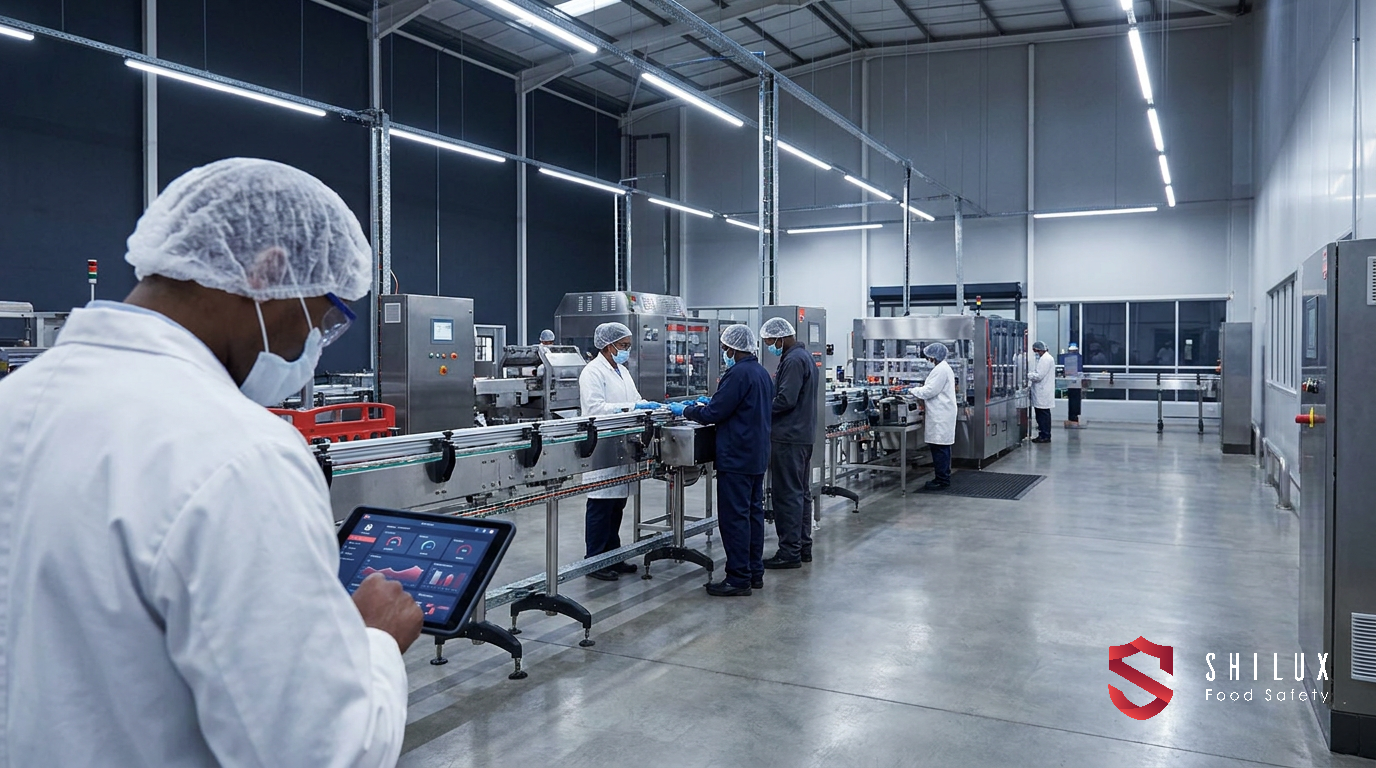
The Shift Toward Digital Compliance
Automation in food safety compliance management refers to the replacement of manual, paper-based recording systems with integrated digital platforms that capture, store, and analyse food safety data in real-time. By transitioning to automated systems, South African food manufacturers ensure continuous adherence to the Foodstuffs, Cosmetics and Disinfectants Act 54 of 1972 and its associated R.638 regulations, while significantly reducing the risk of human error during audit preparation. This technological shift is no longer a luxury; it is a prerequisite for maintaining a robust Food Safety Management System (FSMS) in an increasingly scrutinized global supply chain.
Key Takeaways
- Automation eliminates common manual recording errors and "dry labbing" on production floors.
- Digital systems facilitate immediate notification of Critical Control Point (CCP) deviations.
- Compliance with R.638 hygiene requirements is simplified through automated scheduling and digital checklists.
- Traceability exercises that previously took hours can be completed in minutes, meeting FSSC 22000 and BRCGS requirements.
- Centralised data provides Senior Management with the visibility required to drive a proactive food safety culture.
The Regulatory Foundation: R.638 and Automation
In South Africa, the baseline for any food business is the Regulations Governing General Hygiene Requirements for Food Premises, the Transport of Food and Related Matters (R.638). Under these regulations, a business must possess a valid Certificate of Acceptability (COA) and maintain strict hygiene standards. Traditionally, this involved stacks of paper-based cleaning logs, temperature records, and pest control files.
Automation transforms these requirements by digitising the food premises hygiene requirements. Instead of a supervisor manually checking if a floor has been sanitised at 10:00 AM, a digital system can prompt the operator, require a timestamped photo or signature, and immediately escalate the issue to the QA Manager if the task is missed. This provides a level of verification that paper simply cannot match. For businesses looking to bridge the gap between basic regulation and high-level certification, understanding COA vs FSSC 22000 is vital; automation serves as the bridge that makes the latter attainable.
A common failure mode in manual R.638 compliance is the "completion of records at the end of the shift," often referred to as retrospective logging. When an Environmental Health Practitioner (EHP) arrives for an unannounced inspection, missing signatures for that morning's cleaning tasks can lead to a non-compliance finding. Digital systems fix this by using geofencing or NFC tags; a cleaner must physically be at the sanitation station to scan a tag and open the digital checklist, ensuring that the food premises requirements in South Africa are being met in real-time rather than on paper at 5:00 PM.
Automating Hazard Analysis and CCP Monitoring
The Codex Alimentarius principles of HACCP require rigorous monitoring of Critical Control Points. In a manual environment, an operator might record a fridge temperature every four hours. If the temperature rose above the limit shortly after the first check, the product could be compromised for nearly four hours before the next check.
Automated monitoring systems—utilising IoT sensors and integrated software—provide continuous data streams. If a temperature threshold is breached, the system triggers an automatic alert. This allows for immediate correction vs corrective action. In an audit scenario, a manufacturer can present a clean, uninterrupted graph of temperature data rather than a binder of hand-written logs that might be questioned for legibility or authenticity. This aligns perfectly with HACCP verification and validation protocols, as the system provides an immutable audit trail of every deviation and the subsequent response.
Operational Benefits for QA Managers
For a Quality Assurance Manager in a high-pressure South African manufacturing environment, the primary burden is often administrative. Automation redistributes this workload. Instead of filing papers, the QA Manager can focus on root cause analysis when trends indicate a process is drifting toward a limit. For example, if a cold store temperature is slowly climbing over three days, even if it hasn't hit the HACCP critical limits yet, the software can flag the trend, allowing for preventative maintenance on the compressors before a breakdown occurs.
| Compliance Area | Manual Process Risk | Automated Advantage | Audit Proof/Evidence |
|---|---|---|---|
| Traceability | Slow retrieval; missing invoices/batch codes. | Instant link between raw materials and finished goods. | One-click mass balance reports for any lot number. |
| Training Records | Expiring certificates; untrained staff on the line. | Automatic alerts for renewals; link to access control. | Digital matrix showing current competency for all operators. |
| Supplier Management | Outdated COAs from suppliers; manual emails. | Automated portal for supplier approval process. | Verified approved supplier list with expiring doc alerts. |
| Audit Preparation | Panic-gathering of files; incomplete records. | Audit-ready dashboard available at all times. | Real-time compliance score and document repository. |
| Pest Control | Lost bait station maps; missing technician signatures. | Interactive digital maps with scan-points for every station. | Trend reports on pest activity per zone over 12 months. |
Traceability and Recall Preparedness
One of the most stressful events for a food business is a product recall. Whether triggered by a positive pathogen test or a packaging error, the speed of your response is critical. South African law and GFSI standards (like BRCGS and FSSC 22000) demand that a company can perform a full mass balance and traceability exercise typically within four hours.
In a manual system, this involves searching through receiving records, production logs, and dispatch notes. Digital food traceability automates this by linking barcodes at every stage of the process. With a few clicks, the system generates a report showing exactly which batch of raw material went into which finished units and where those units were shipped. This precision protects the brand and, more importantly, the consumer. During a mock recall, an automated system allows the team to focus on the recall communication plan rather than the logistics of finding paperwork.
Overcoming Common Traceability Gaps
The most frequent failure in traceability is the "missing link" where a rework batch or an ingredient addition (like a spice blend) isn't recorded on the production sheet. Automation eliminates this by requiring a barcode scan of every ingredient before the system allows the batch to be "started" in the software. This ensures that lot traceability is maintained even for complex recipes. For manufacturers exporting to Europe or the US, being able to demonstrate this level of product traceability is often a non-negotiable requirement for vendor approval.
The Role of Automation in Internal Auditing
Effective internal audits are the best defence against non-conformities during external certification audits. Automation streamlines the internal audit process by providing ready-built templates and scheduling tools. When an auditor finds a non-conformance, they can log it directly into the system, attach a photo of the issue, assign a responsible person, and set a deadline for the CAPA process.
This ensures that no finding is "lost in the system." For South African SMEs, this level of discipline is often what separates an "Achieved" audit from a "Failed" one. Automated systems can also track the CAPA effectiveness verification, ensuring that the root cause was actually addressed rather than just applying a temporary fix. It also provides Senior Management with a clear view of the health of the FSMS, supporting the requirement for leadership in food safety found in ISO 22000 and FSSC 22000.
Supplier Risk and Food Fraud Mitigation
Managing the supply chain is one of the most complex parts of food safety. Automation simplifies the supplier risk assessment by automatically flagging suppliers whose certifications are about to expire. In a manual world, it is easy to miss that a spice supplier’s BRCGS certificate expired last month. In an automated system, that supplier is automatically "blocked" from receiving orders until the new certificate is uploaded.
This is particularly important for food fraud mitigation. By maintaining a digital VACCP risk assessment, businesses can monitor global alerts regarding commodity adulteration and update their testing protocols instantly. If a specific raw material is flagged for high risk of adulteration globally, the system can prompt the receiving department to take additional samples for lab testing before the material is accepted into the facility.
Checklist: Selecting an Automated Compliance System
Before investing in digital compliance software, ensure it can handle these core South African manufacturing requirements:
- Real-time Data Capture: Can it integrate with your existing scales, probes, or sensors via Bluetooth or Wi-Fi?
- Offline Functionality: Can operators still log data in a cold store or if the factory Wi-Fi drops out, with auto-sync later?
- R.638 Alignment: Does the system house COA documents and hygiene logs specifically structured for SA regulatory inspections?
- Audit Trail (21 CFR Part 11 style): Does the system record every change made, maintaining the original value and the new value?
- Mobile Accessibility: Can supervisors verify prerequisite programmes (PRPs) on a tablet while on the factory floor?
- Reporting: Can it generate a full traceability record in under 30 minutes for a mock recall?
- CAPA Management: Does it allow for root cause analysis examples to be stored as a knowledge base for future training?
Operational Implementation: Moving from Paper to Screen
Transitioning to automation requires more than just buying software; it requires a change in food safety culture leadership. The biggest hurdle is often staff resistance on the production floor. To ensure success, South African manufacturers should follow a phased approach:
- Digitalize PRPs First: Start with non-critical records like cleaning logs and visitor registers. This gets staff used to using tablets.
- Integrate CCP Monitoring: Move to digital temperature and pH logging once the team is comfortable with the hardware.
- Implement Automated Inventory: Link the digital system to receiving and dispatch to enable real-time batch traceability.
A common mistake is trying to automate the entire factory in one weekend. This leads to data entry errors and frustration. By taking a modular approach—perhaps starting with supplier management—businesses can prove ROI early and gain buy-in from the workforce.
Overcoming the High Cost Perception
Many South African food manufacturers, particularly SMEs, hesitate to automate due to perceived costs. However, the cost of a single food recall or a lost export contract due to poor record-keeping far outweighs the investment in a digital QMS. Automation reduces the man-hours required for data entry and filing, allowing staff to be redeployed to value-adding activities like production optimisation and quality improvement.
Furthermore, automation supports Food Defence and Food Fraud mitigation. By digitising the supplier food fraud risk assessment, businesses can ensure that only approved, vetted suppliers are in the system, preventing unauthorised purchases that could lead to contamination or fraud. This is a critical component of FSSC 22000 food defence requirements and ensures that the site remains secure from intentional adulteration.
Future Trends: AI and Predictive Compliance
We are moving beyond simple digital logging toward predictive compliance. By analysing historical data captured through automation, AI can identify patterns that precede a failure. For example, if a pasteuriser's temperature starts to fluctuate within its allowable limits, the system can flag it for maintenance before it actually fails a CCP. This proactive approach is the pinnacle of modern food safety management.
Additionally, digital food safety platforms are beginning to integrate with external laboratory LIMS systems. This means that a Certificate of Analysis (COA) for a finished product can be automatically generated by the software as soon as the lab results are uploaded, checking the results against the product specification without human intervention. This eliminates the risk of shipping a product that has failed a microbiological limit due to a clerical oversight.
Compliance is no longer about proving what you did yesterday; it is about ensuring safety today and predicting risks for tomorrow. For South African manufacturers, the transition to automated compliance is the most significant step toward achieving world-class safety standards.
At Shilux, we assist food manufacturers in navigating this digital transformation. Whether you need regulatory compliance consulting to ensure your system meets R.638 or are ready to implement our QMSURE paperless system to eliminate the burden of manual filing, our team is here to support your journey toward modern, automated food safety excellence. Our approach integrates gap audits to identify where your manual systems are failing and how automation can provide the most immediate benefit to your operation.