Woolworths’ planned acquisition of in2food has cleared its regulatory hurdles, bringing one of South Africa’s major food suppliers closer to becoming part of the retailer’s own group. On 8 October 2026, Woolworths Holdings confirmed that all regulatory suspensive conditions for its acquisition of 100% of in2food had been fulfilled, with implementation expected in the coming month.
The announcement is significant beyond corporate ownership. It brings a supplier relationship spanning more than 30 years into a more closely integrated structure, with potential implications for how products are developed, sourced and brought to market. For South African food manufacturers, it is an opportunity to consider what resilient supply chains require from their quality and food-safety systems.
What the deal involves
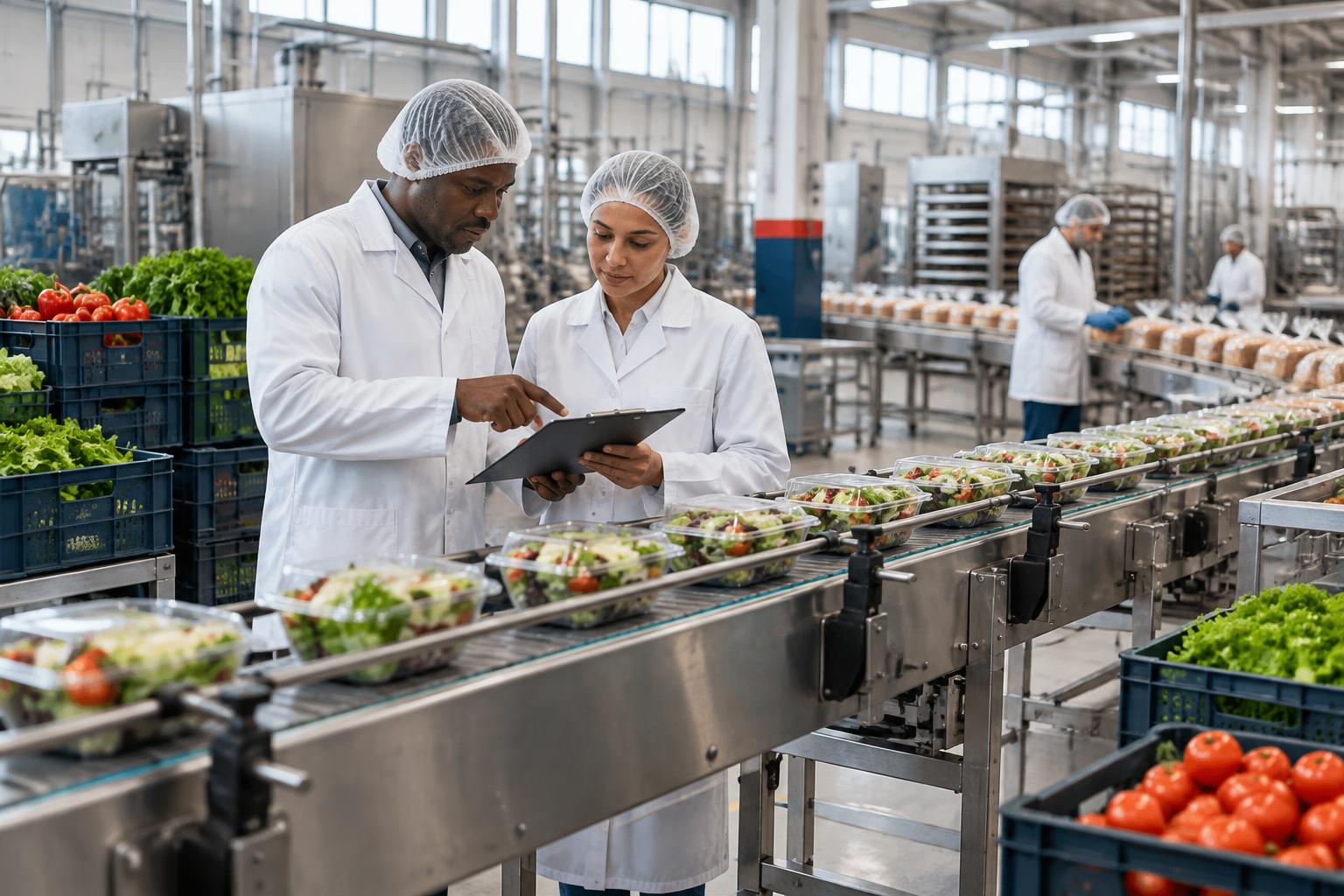
in2food generates more than R5 billion in annual revenue and supplies convenience foods, fresh produce, long-life or ambient products and bakery products. Woolworths is its largest customer. The R5 billion figure describes the supplier’s annual revenue; it is not the acquisition purchase price.
Woolworths says the transaction is intended to strengthen supply-chain resilience and support greater agility and efficiency, faster speed-to-market, innovation and responsiveness to customer needs. Improved product availability is part of the wider supply-chain rationale. These are intended benefits, not outcomes already demonstrated by the acquisition.
On completion, in2food will remain a standalone business within Woolworths. BusinessTech reports that the current senior leadership team is expected to remain in place, supporting operational continuity.
The competition process also addressed the position of other suppliers and employees. As reported by BusinessTech, the approval conditions include continued procurement from competing suppliers for a specified period after implementation, and protection against merger-related retrenchments for the duration of a moratorium. The cited report does not specify those periods, so this article does not assign a duration to either condition. The employee condition concerns merger-related retrenchments during that period, rather than an unrestricted promise about all future employment decisions.
As at this article’s publication on 13 October, the 8 October announcement confirms regulatory clearance and expected implementation—not that the acquisition has already been completed.
Why it matters to the food industry
A long-standing retailer–manufacturer relationship can already involve close collaboration. Ownership integration potentially adds another level of coordination across investment, forecasting, product development and production planning. Woolworths’ stated objectives point towards a supply chain that can respond more quickly while maintaining the differentiated products its customers expect.
For a food business, however, resilience is more than ownership of production capacity. It also depends on raw-material availability, suitable alternative suppliers, reliable utilities, transport, cold-chain capability where needed and people who can keep operations running during disruption. South African manufacturers must consider practical pressures such as electricity interruptions, water constraints and delivery delays within their own operating context.
The procurement conditions are a reminder that closer integration does not remove the wider supplier ecosystem. Independent suppliers still need clear technical expectations, fair operational interfaces and dependable communication. The announcement should not be interpreted as evidence that Woolworths is ending its relationships with other suppliers; its official statement expressly recognises their continuing role.
Food safety and supplier assurance implications
The following is Shilux analysis, not a statement of new risks identified at Woolworths or in2food, and not a claim made by Woolworths. The acquisition itself does not establish a food-safety risk. The relevant lesson is that any changes introduced as part of business integration should remain subject to the same disciplined controls as other operational changes.
Supplier assurance remains evidence-led
Group ownership is not a substitute for supplier approval. Technical teams should continue to understand where ingredients and packaging originate, assess their risks, agree specifications and review performance. Where responsibilities move between teams, the approval owner and escalation route should remain unambiguous. Our supplier management and approval guide explains the underlying principles.
Traceability must work across organisational boundaries
If ordering platforms, product codes or reporting systems change, batch information must still connect incoming materials, production records and customer deliveries. A practical traceability exercise can establish whether the new interfaces preserve that connection and support timely withdrawal or recall decisions. The Shilux food traceability guide provides further context.
Change control and specifications protect consistency
Faster development should not mean bypassing technical approval. A change to an ingredient, process, site, packaging material or product specification should trigger an assessment proportionate to its impact. Teams should consider hazard controls, shelf life, label accuracy, process capability and who must approve the change before release. The question is not simply whether a product can reach the shelf faster, but whether the evidence supporting that release remains sound.
Allergen controls need particular attention during product changes
A diverse portfolio can involve different allergen profiles, production environments and cleaning needs. Recipe substitutions, line transfers or changes in ingredient suppliers should therefore be reviewed for allergen cross-contact, cleaning effectiveness and label declarations. These are general controls for food manufacturers, not allegations about this transaction. They belong within a documented food-safety system such as the approach explained in our HACCP guide for South African food businesses.
Culture and audit oversight should stay visible
Maintaining senior leadership can support continuity, but technical accountability must remain clear throughout any transition. People should know who can hold product, how concerns are escalated and what happens when commercial deadlines conflict with release criteria. Audit programmes should follow actual risk and performance rather than assuming an internally owned supplier requires less scrutiny. Our food safety culture guide explores the behaviours that make these systems effective.
Business continuity requires workable alternatives
Closer planning may improve responsiveness, but contingency arrangements still need testing. Manufacturers should consider what happens if a key site, ingredient, utility or transport route becomes unavailable. Alternative production or sourcing arrangements must be technically suitable and approved; availability alone is not enough. Resilience is strongest when operational recovery plans and food-safety requirements are designed together.
What food manufacturers can learn
The practical takeaway is not that every manufacturer needs a retailer owner. It is that dependable supply relationships increasingly rely on the quality of the systems connecting organisations. Manufacturers can use this development to review five questions:
- Can we demonstrate supplier control? Keep approvals, risk assessments, specifications and performance reviews current and accessible.
- Can we manage change without losing control? Give technical teams a defined role before ingredient, process or site changes are implemented.
- Can we trace a batch promptly? Test real records across the supply chain rather than relying only on a written procedure.
- Can we maintain availability during disruption? Check whether contingency suppliers and production arrangements are both operationally viable and technically approved.
- Can our people challenge a decision? Preserve reporting routes, product-hold authority and a culture that treats concerns as information to act on.
Businesses reviewing their external assurance arrangements can also consider risk-based supplier audits where an independent assessment would add value. The objective is useful evidence and follow-through, not an audit conducted merely to complete a checklist.
Conclusion
Woolworths’ in2food acquisition marks a substantial development in South Africa’s food supply chain: a relationship of more than three decades is moving towards a new ownership structure, with resilience, efficiency and innovation among the stated objectives.
Shilux’s perspective is that commercial integration and technical assurance should reinforce one another. Supplier oversight, traceability, controlled change, allergen management and food safety culture remain essential regardless of who owns a business. For manufacturers, the most useful response is to strengthen those fundamentals—not to assume that this acquisition itself signals a safety problem.
Sources and attribution
- BusinessTech, 8 October 2026: reporting on Woolworths’ acquisition of its long-standing supplier — transaction details, supplier scale, leadership intentions and competition conditions.
- Woolworths Holdings, 8 October 2026: Woolworths Welcomes Regulatory Approval of in2food Acquisition — official confirmation of regulatory clearance, expected implementation, strategic rationale and standalone business status.
This is original Shilux industry commentary based on the linked announcements and reporting. Food-safety implications are Shilux’s analysis; competition-condition discussion is a summary, not legal advice.