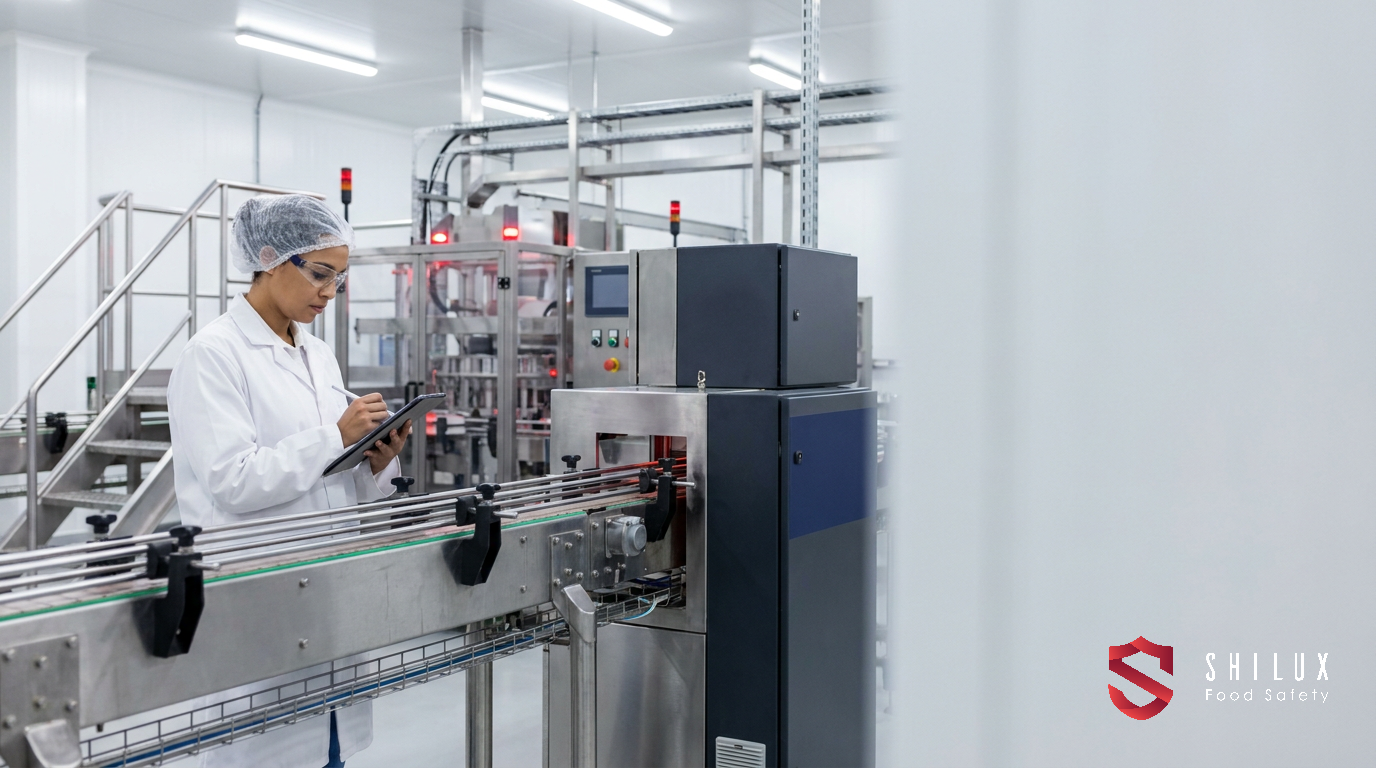
Digital recordkeeping improves audit readiness by centralising food safety data into a single, searchable source of truth that eliminates the risk of missing, illegible, or fraudulent paper entries. It ensures real-time compliance by automating alerts for missed checks and providing instant retrieval of traceability records during high-pressure audit scenarios. By digitising the Food Safety Management System (FSMS), manufacturers can demonstrate proactive control to auditors, significantly reducing the time and stress associated with manual document review.
Key Takeaways
- Instant Data Retrieval: Access critical documents like the Certificate of Acceptability or CCP logs in seconds.
- Regulatory Alignment: Simplifies compliance with South Africa’s R.638 hygiene requirements and the Foodstuffs, Cosmetics and Disinfectants Act 54 of 1972.
- Reduced Human Error: Prevents "back-filling" of records and ensures all mandatory fields are completed at the point of activity.
- Enhanced Traceability: Connects raw material batches to finished goods digitally, facilitating rapid mock recalls.
- Audit Confidence: Professional, digital reporting signals high levels of management commitment and food safety culture.
The Shift from Paper to Digital Compliance
For decades, the South African food manufacturing sector has relied on lever-arch files and clipboard-bound checklists. While paper is familiar, it is inherently flawed for modern readiness audits. Paper records are susceptible to physical damage, loss, and the infamous "Friday afternoon rush" where an entire week’s worth of temperature logs is filled in from memory just before a shift change. This practice, often referred to as "dry-labbing," is a major point of failure during inspections by the Department of Health.
In the context of South African law, specifically Regulation R.638 (Regulations Governing General Hygiene Requirements for Food Premises, the Transport of Food and Related Matters), maintaining accurate and accessible records is a legal prerequisite for holding a valid Certificate of Acceptability. When an Environmental Health Practitioner (EHP) or a GFSI auditor walks onto the floor, the speed and accuracy with which you produce records determine the initial tone of the audit. If a facility cannot produce a cleaning log for a specific high-care zone within five minutes, the auditor's professional skepticism increases, leading to a deeper dive into other potentially weak areas.
Operational Benefits of Digital Recordkeeping
Eliminating the "Search and Rescue" Mission
During a internal audit or a third-party certification audit, the auditor will typically select a specific production date and ask to see the full document trail: from the delivery vehicle’s temperature at receipt to the final metal detector check on the packing line. In a paper-based system, this often triggers a frantic search through dusty archives, where a single missing page from a thermal processing log can result in a Major Non-Conformity.
Digital systems allow for "Batch-Centric" views. By entering a batch number, a QA Manager can instantly pull up every linked digital signature, time-stamped entry, and uploaded photo of a non-conformance. This level of organisation directly addresses requirements found in FSSC 22000 documentation standards, which demand that information be both protected and available. Furthermore, digital systems eliminate the "illegibility factor." In many South African plants, diverse language backgrounds and varying levels of literacy can lead to poorly written records that an auditor may reject as unverifiable. Digital inputs, using pre-defined dropdowns or clear numeric fields, remove this ambiguity.
Real-Time Exception Reporting and Monitoring
Unlike paper, which is passive, digital recordkeeping is active. If a cold store temperature exceeds its critical limit as defined in your HACCP plan, a digital system can trigger an immediate SMS or email alert to the Food Safety Team Leader. This enables the team to initiate a CAPA process immediately, rather than discovering the deviation three days later during a manual review of the log sheets. This immediate feedback loop is critical for preventing the distribution of unsafe products, which is a core tenet of regulatory compliance in South Africa.
Consider a dairy processor in the Western Cape. If a pasteurisation temperature falls below the critical limit, an automated system can halt the line or flag the batch for quarantine instantly. In a manual system, if the operator fails to notice the dip and records a false "compliant" temperature, the risk of a food recall increases exponentially. Digital systems provide the "Why" behind the data—capturing not just the temperature, but the exact second it deviated and the subsequent correction vs corrective action taken by the operator.
Legal vs. Certification Requirements
It is vital for South African manufacturers to distinguish between what the law requires and what certification bodies (like BRCGS or FSSC 22000) demand. While R.638 focuses on basic hygiene and the prevention of health nuisances, GFSI-benchmarked standards require deep dive evidence of continuous improvement and systemic resilience.
| Requirement Type | Source/Standard | Digital Advantage | Common Failure Mode (Paper) |
|---|---|---|---|
| Legal Hygiene | R.638 & Act 54 of 1972 | Ensures all cleaning schedules and pest control logs are immutable and time-stamped. | Missing signatures on cleaning logs; logs filled in advance. |
| Traceability | Codex / SANS 10330 | Automates mass balance calculations for faster recall testing. | Inability to account for 100% of raw materials due to calculation errors. |
| HACCP Monitoring | SANS 10330:2020 | Provides tamper-proof evidence of CCP monitoring and corrective actions. | CCP logs stored in damp areas becoming illegible or destroyed. |
| Supplier Quality | GFSI Benchmarks | Centralises COAs and supplier audit reports in a single digital approved supplier list. | Expired COAs or B-BBEE certificates stored in separate departments. |
| Training Evidence | R.638 / ISO 22000 | Digital logs of haccp for supervisors training linked to operator tasks. | Staff performing tasks they aren't signed off for on the training matrix. |
Deep Dive: Audit Documentation Practice
During a supplier audit, an auditor isn't just looking for the presence of data; they are looking for the integrity of the data. Digital recordkeeping enforces integrity through mandatory fields. For example, a worker cannot submit a pre-operative checklist without confirming that the conveyor belt was inspected for foreign bodies. This forces adherence to GMP PRPs at every shift change.
Document Control and Versioning
A frequent minor non-conformity in South African food factories is the use of obsolete forms. When a HACCP plan is updated, the paper forms on the factory floor must be manually replaced. In a large facility in Gauteng or KwaZulu-Natal, it is easy for one clipboard to be missed, leading to an auditor finding an old version of a CCP log. A digital FSMS documentation system updates the "form" globally. Once the QA Manager hits 'publish,' every tablet on the floor reflects the new version, ensuring 100% version control compliance instantly.
The "Why" of Time-Stamping
Auditors look for the sequence of events. If a metal detector check is recorded at 08:00, 10:00, and 12:00, but all three entries were written with the same pen in the same handwriting style at the end of the shift, the auditor will suspect data manipulation. Digital systems provide metadata—hidden logs that show the exact GPS coordinates and time the entry was saved. This level of food authenticity in recordkeeping builds immense trust with external certification bodies.
How Digital Systems Change the Auditor’s Experience
An auditor’s confidence is built on the transparency of your system. When you use digital tools, you demonstrate a robust food safety culture. It shows that management has invested in the tools necessary for the staff to succeed. Auditors frequently report that sites with digital systems tend to have fewer "Minor" non-conformities related to clerical errors, such as missing dates, illegible handwriting, or incorrect document versions.
Streamlining the Traceability Exercise
One of the most stressful parts of a GMP audit is the 2-hour traceability window. You must trace a finished product back to its ingredients and forward to the first point of distribution. In a manual system, this involves pulling delivery notes, production logs, and dispatch records from multiple departments. A digital food traceability system allows you to complete this in minutes by linking the unique Lot ID of a raw material (e.g., a spice blend from a supplier) directly to the finished product SKU and the specific customer invoice.
This efficiency is vital for BRCGS product recall requirements. During a mock recall, the ability to show a clean mass balance—where the amount of raw material used plus waste equals the amount received—digitally proves that your facility has full control over its inventory, preventing potential cross-contamination or mislabelling issues.
Closing the Loop on Non-Conformities
A common finding in South African food plants is the failure to "close the loop" on corrective actions. If a supervisor notes a broken window in the warehouse, the paper record might show the issue, but rarely the proof of repair. A digital system tracks audit findings and nonconformities, sending reminders to department heads until the evidence of the fix (like a photo of the new window) is uploaded. This ensures that when the environmental health practitioner returns, they don't find repeat issues, which is a major red flag for systemic failure and could lead to the revocation of the COA.
Comprehensive Checklist: Moving to Digital Recordkeeping
Transitioning from paper to digital is not just about buying tablets; it’s about aligning the software with your facility layout and workflow. Use this checklist to ensure your system is audit-ready:
- User Access Control: Does every staff member have a unique login? This is essential for food defence to ensure only authorised personnel are accessing and recording sensitive CCP data.
- Offline Capability: Can staff record data in areas with poor Wi-Fi, such as stainless-steel heavy production zones or deep-freeze stores? The system must sync once a connection is re-established.
- Validation: Have the digital forms been validated against your HACCP plan for food manufacturers? The digital fields must match the parameters defined in your hazard analysis.
- Evidence Capture: Does the system allow for photo uploads? A photo of a cleaned mixer is much stronger evidence for a hygiene audit than a simple tick-box.
- Supplier Integration: Can you link your digital approved supplier list to receive alerts when a supplier's FSSC 22000 certificate is about to expire?
- Root Cause Integration: Does the system prompt for a 5-whys analysis when a critical limit is breached?
Common Digital Transition Failure Modes and Solutions
Failure Mode 1: Tech Fatigue. Operators find the software too complex and revert to writing notes on their hands to enter later. Solution: Simplify the UI. Use large buttons and pictorial guides for basic food safety tasks. Train staff thoroughly using haccp for supervisors modules to ensure they understand why the data is being collected.
Failure Mode 2: Broken Hardware. Tablets get dropped or damaged by high-pressure cleaning. Solution: Invest in industrial-grade, IP67-rated ruggedized cases. Ensure the maintenance food safety team is involved in the rollout to provide secure docking stations away from wash-down zones.
Failure Mode 3: Data Overload. Collecting so much data that no one reviews it. Solution: Use dashboards to highlight only the exceptions. Management should focus on food safety culture metrics like "percentage of checks completed on time" rather than trying to read every individual entry.
Future Trends: Data-Driven Food Safety
The industry is moving toward "predictive" food safety. Digital recordkeeping is the first step toward this. Once your data is digital, you can perform trend analysis. For example, you might notice that a specific packing machine has a micro-spike every third Tuesday. This allows you to investigate the root cause—perhaps a specific sanitation shift or a batch of raw material—before a failure occurs.
In South Africa, where margins are tight and the cost of a recall can be devastating (both financially and to brand reputation), the transition to digital records is a protective measure. It moves the Food Safety Manager from being a "document chaser" to a "risk manager." This shift is supported by various food safety management training programs that now emphasize digital literacy as a core competency for modern QA professionals.
If you are ready to modernise your compliance journey, Shilux provides the expertise to bridge the gap between traditional manufacturing and digital excellence. We offer specialised food safety consulting to help you map your processes, alongside our QMSURE paperless management system designed specifically for the South African regulatory environment. Whether you need a gap audit to assess your current readiness or training to upskill your team on digital tools, our specialists are here to ensure your next audit is your most successful yet. From navigating the complexities of COA requirements to preparing for a BRCGS certification, we provide the end-to-end support needed for a modern factory. Contact us today to discuss your transition to a paperless facility and take the stress out of your next audit cycle.