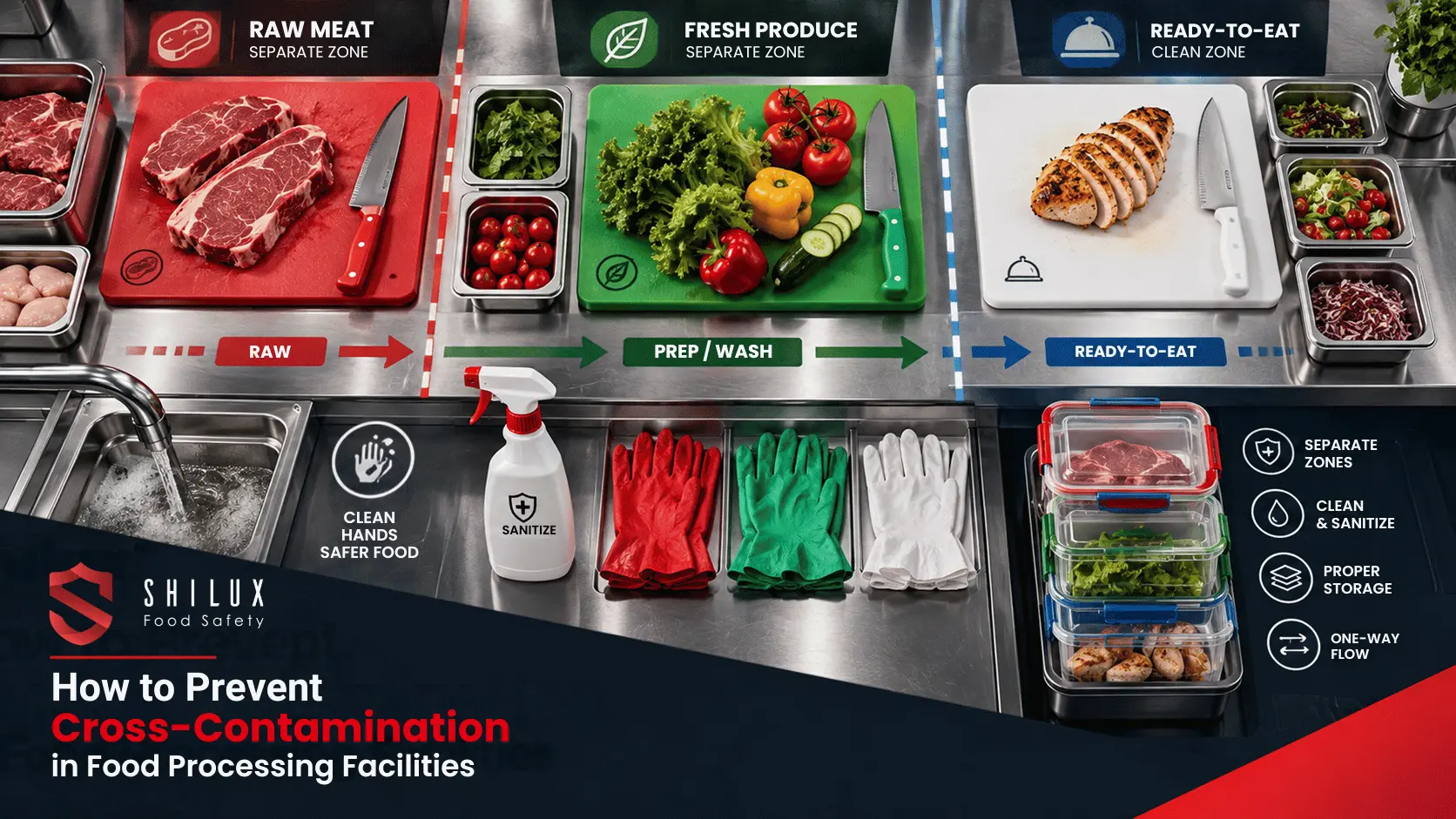
Preventing cross-contamination in food processing facilities requires a three-tiered approach: robust facility design to ensure logical product flow, rigorous execution of cleaning and sanitation protocols, and a high-compliance food safety culture among personnel. By integrating these controls into your Hazard Analysis and Critical Control Point (HACCP) system, manufacturers can mitigate biological, chemical, physical, and allergenic risks effectively. In the South African context, where environmental factors like water scarcity and temperature fluctuations can impact hygiene, these controls must be resilient and adaptable.
Key Takeaways
- Regulatory Alignment: Compliance with the Foodstuffs, Cosmetics and Disinfectants Act 54 of 1972 and Regulation R.638 is the legal minimum for South African facilities.
- Zonation: Physical separation of high-risk and low-risk areas is the most effective barrier against microbial transfer.
- Validated Cleaning: Visual cleanliness is insufficient; sanitation must be validated through microbial swabbing and ATP testing.
- Personnel Control: Staff movement, handwashing habits, and personal protective equipment (PPE) management are critical variables in contamination control.
- Equipment Design: Poorly designed equipment with "dead legs" or porous surfaces provides harborage for pathogens like Listeria monocytogenes.
The Legal Framework for Cross-Contamination in South Africa
In South Africa, the primary legal requirement for food safety is the Foodstuffs, Cosmetics and Disinfectants Act 54 of 1972. Specifically, Regulation R.638 (Regulations Governing General Hygiene Requirements for Food Premises, the Transport of Food and Related Matters) dictates the mandatory hygiene standards every food business must maintain to hold a valid Certificate of Acceptability.
Under R.638, food manufacturers are legally obligated to ensure that food is protected against contamination at every stage of production. This includes the prevention of "cross-pollination" between raw and cooked products and the strict management of waste. Failure to comply with these R.638 regulations can lead to the immediate suspension of the facility's right to operate by an Environmental Health Practitioner (EHP). Beyond the legal minimums, manufacturers pursuing FSSC 22000 certification must implement more granular controls, particularly regarding environmental monitoring and supplier management.
1. Facility Layout and Zonation
One of the most common causes of cross-contamination is a linear flow failure. If raw ingredients cross paths with finished goods, the risk of pathogen transfer increases exponentially. Effective prevention starts with facility layout consultancy to ensure a "one-way" flow of materials, which prevents the "backtracking" of contaminated air, water, or personnel into clean areas.
High-Risk vs. Low-Risk Zonation
Manufacturers should categorise their facility into distinct zones based on the vulnerability of the product. For instance, in a ready-to-eat (RTE) meat facility, the "High-Care" zone (where cooked meat is sliced and packed) must be physically separated from the "Raw" zone (where carcasses are received). This involves:
- Air Handling: Dedicated air filtration and positive pressure in high-care areas to prevent airborne contamination from raw intake bays or waste areas.
- Physical Barriers: Permanent physical barriers like walls or partitions, rather than just floor markings or tape, which are easily ignored during high-pressure shifts.
- Drainage Logic: Separate drainage systems to prevent backflow from raw areas to finished goods areas. In many South African facilities, blocked municipal drains can cause backflow; therefore, non-return valves and floor slope are vital design considerations.
- Transition Points: Boot washes and changing rooms must serve as "gated" entry points where personnel are forced to change into zone-specific PPE before entering sensitive areas.
2. Managing Prerequisite Programmes (PRPs)
While HACCP focuses on specific critical limits, prerequisite programmes (PRPs) provide the foundation that prevents contamination from occurring in the environment. Under ISO 22000 and FSSC 22000, these are not mere suggestions; they are mandatory operational controls that require documented evidence of effectiveness.
Sanitation and Chemical Control
Cross-contamination often occurs through "cleaning tools." Using the same mop in a raw meat area and a packaging store is a high-risk activity. Implement a color-coded system to make non-compliance immediately visible to supervisors.
| Zone / Area | Equipment Colour | Logic and Application |
|---|---|---|
| Raw Processing | Red | High microbial load; tools must remain in raw bays to prevent Salmonella transfer. |
| High-Care / RTE | Blue / White | Sanitised environment; tools must be stored in sanitiser solution or dry racks. |
| Allergen-Specific | Yellow | Dedicated to lines containing nuts/soy to prevent cross-contact. Never mix with red/blue. |
| External / Non-Food | Black | Drains, waste areas, and outdoor maintenance. Used to prevent soil/pests entering production. |
A common failure mode in South African factories is the use of "utility" cloths or sponges that are shared between zones. To fix this, transition to single-use disposable wipes or zone-locked microfibre cloths that are laundered in-house under validated high-temperature cycles.
3. Allergen Cross-Contact Prevention
In South African labeling regulations (R.146), cross-contamination involving allergens is referred to as "cross-contact." This is a significant risk for SMEs that handle multiple product types on the same line. If a facility processes both gluten-free and conventional products, a robust HACCP plan must include specific cleaning validations (ELISA testing) to ensure no residue remains between batches.
Practical Control Measures for Allergens:
- Scheduling: Always produce allergen-free products at the start of the shift or immediately after a full deep clean. Scheduling by "allergen intensity" (e.g., milk first, then soy, then peanut) reduces the burden on sanitation teams.
- Dedicated Utensils: Use distinctively marked scoops and containers for allergenic ingredients like peanut flour or soy protein. Labeling these containers clearly in the local language of the operators (e.g., isiZulu or Afrikaans) improves compliance.
- Storage: Store allergens on bottom racks to prevent accidental spillage onto non-allergenic ingredients stored below. Avoid storing bulk bags of flour above open spice bins.
- Airborne Management: Use dust extraction systems at the point of addition for powdered allergens like wheat flour or milk powder to prevent "drift" across the factory floor.
4. The Role of Personnel and Food Safety Culture
Even the most advanced facility will fail if the food safety culture is weak. Human behaviour is the final line of defence against cross-contamination. Staff must understand not just what to do, but why they are doing it, linking their actions to consumer health.
Handwashing and PPE Habits
Handwashing is the single most effective way to prevent the transfer of pathogens. However, in many South African factories, handwashing stations are poorly maintained or located inconveniently. Ensure that:
- Hands-Free Operation: Sinks are elbow- or foot-operated to prevent re-contaminating hands on taps. Automated turnstiles that only open after a timed hand-sanitisation cycle are excellent for high-care zones.
- SABS Compliance: Soap and sanitisers are SABS-approved for food environments (specifically SANS 1828 and SANS 1853).
- PPE Integrity: Staff must be trained to change gloves and aprons when moving between different processing zones. A common mistake is wearing blue high-care smocks into the canteen; this must be a red-line violation in your food safety culture policy.
- Training Accessibility: Conduct basic food safety training in the primary language of the workforce to ensure technical terms like "cross-contamination" are fully grasped.
5. Monitoring and Verification
Under HACCP verification and validation protocols, you must prove that your contamination controls work. This is achieved through systematic monitoring and periodic testing of the environment, not just the final product.
The Contamination Control Checklist
Use this checklist during your monthly internal audits to identify gaps before they lead to a recall. A "No" in any category requires immediate root cause analysis and corrective action.
| Category | Checkpoint | Common Failure Mode | Compliance (Y/N) |
|---|---|---|---|
| Personnel | Are staff wearing clean, zone-specific PPE correctly? | Wearing high-care hairnets in the raw meat reception area. | |
| Equipment | Is there any evidence of rust or peeling paint on food-contact surfaces? | Using "temporary" duct tape on conveyor belts. | |
| Environment | Are drains flowing away from high-risk areas? | Stagnant water pools near packaging lines due to poor floor leveling. | |
| Chemicals | Are cleaning chemicals stored away from raw materials? | Sanitiser spray bottles left on top of ingredient bags. | |
| Waste | Is waste removed via a route that avoids production lines? | Taking leaking trash bags through the clean slicing room. |
6. Equipment Maintenance and Hygienic Design
Maintenance staff often introduce contamination through "temporary fixes" using non-food-grade lubricants or duct tape. It is essential to provide food safety training for maintenance staff so they understand the risks of swarf, nuts, bolts, and microbial niches.
Hygienic Design Principles
- Material Choice: Equipment should be made of stainless steel (304 or 316 grade) with smooth welds. Avoid galvanized steel or wood, which can splinter and harbor bacteria.
- Self-Draining Surfaces: All surfaces should be sloped to prevent water pooling, which is a primary breeding ground for Listeria.
- Accessibility: Equipment must be easily dismantled without specialized tools for daily cleaning. If a machine takes four hours to open, the cleaning team is likely to skip the internal components.
- Legacy Equipment: For older machinery, conduct a gap audit to identify "dead legs"—internal pipes where product can sit and ferment, contaminating the next batch.
7. Supplier Management and Raw Material Risks
Contamination often enters the facility via the back door. If a supplier delivers raw chicken in leaking crates, they are introducing pathogens into your receiving bay. A robust supplier management programme ensures that vendors adhere to the same cross-contamination standards as your facility.
Key actions include:
- Reviewing supplier COA requirements to ensure microbiological safety before offloading.
- Conducting supplier audits to verify their zonation and allergen controls.
- Inspecting transport vehicles for cleanliness; a truck used for hides should never be used for finished food products without a validated wash-out.
8. Digital Documentation and QMSURE
In a high-volume South African production environment, paper-based hygiene logs are prone to "dry-labbing" (filling in records without performing the task). Digitizing these records through the QMSURE system allows for real-time verification. When a cleaning task is completed, it is timestamped and can be linked to a photo of the clean equipment. This provides an immutable audit trail for EHPs and GFSI auditors, proving that cross-contamination controls are active and effective 24/7.
Conclusion
Preventing cross-contamination is an ongoing battle that requires vigilance at every level of the organisation. From the initial design of the facility to the daily habits of the floor staff, every detail contributes to the safety of the final product. By adhering to R.638 and implementing the structured approach required by GFSI-benchmarked standards, South African manufacturers can ensure consumer safety, minimize the risk of a costly food recall, and secure business longevity.
Shilux provides comprehensive support to food manufacturers looking to strengthen their operational controls. Whether you need an independent GMP audit to identify contamination risks or wish to digitise your hygiene records using the QMSURE paperless system, our team is ready to assist. Explore our food safety consulting services or contact us today to secure your facility's compliance and protect your brand reputation.