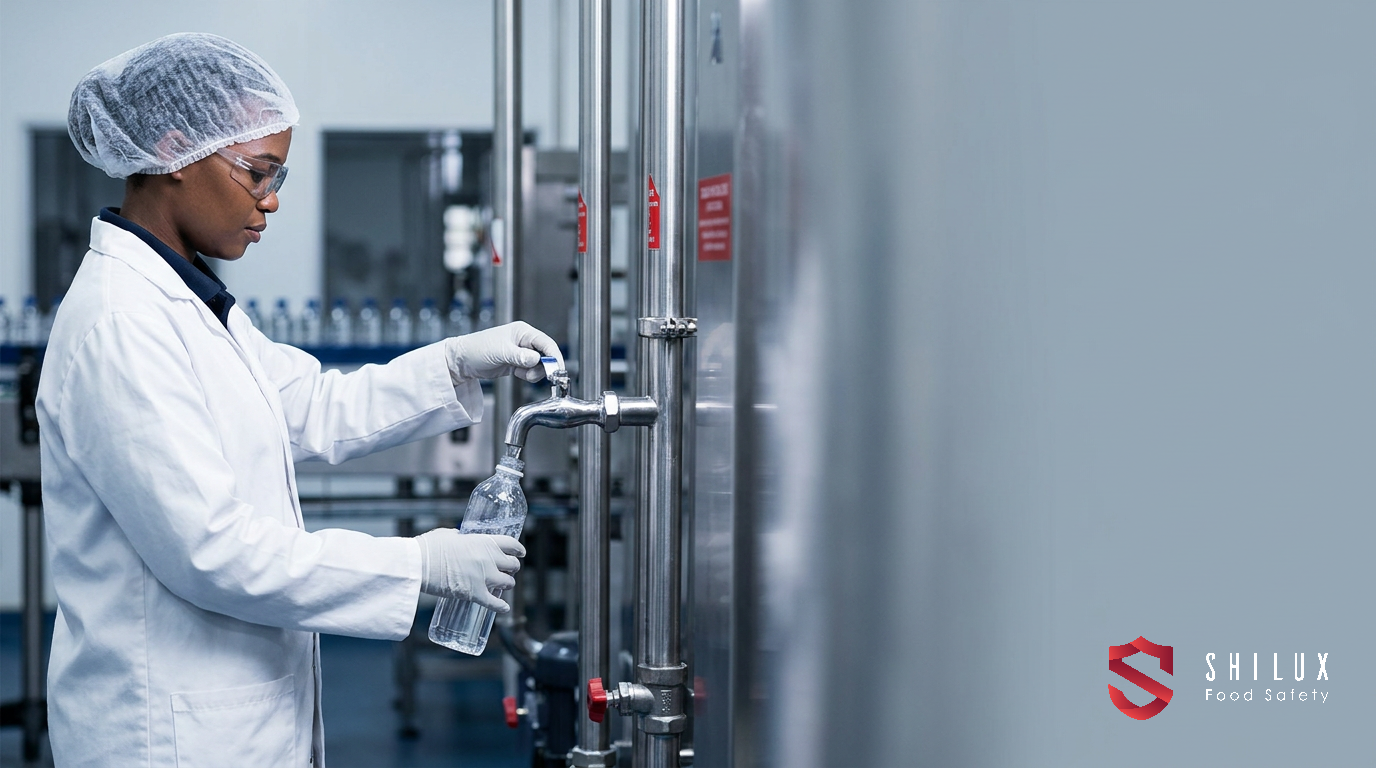
In South African food manufacturing, water quality is managed through compliance with the Foodstuffs, Cosmetics and Disinfectants Act 54 of 1972 and its specific regulation R.638, which mandates that water used in food handling must be 'potable'. Legally, this is defined by the SANS 241 standard for drinking water, requiring manufacturers to implement regular microbial and chemical testing, validated treatment systems where necessary, and meticulous record-keeping to demonstrate safety during audits.
Key Takeaways
- Potability is Mandatory: All water contacting food or food-contact surfaces must meet SANS 241 standards.
- Risk-Based Testing: Testing frequency should be determined by a hazard analysis, not just an annual 'check-box' exercise.
- Treatment Validation: If you treat water on-site (e.g., UV or chlorination), you must prove the system works through regular monitoring.
- Source Matters: Municipal, borehole, and recycled water carry different risk profiles and require specific controls.
- Documentation is Evidence: Without a water management plan and test results, you cannot prove compliance during a COA inspection or GFSI audit.
Legal Requirements vs. Certification Standards
It is vital for QA managers to distinguish between what the law requires and what certification bodies demand. In South Africa, the baseline is the R.638 regulations. This regulation requires that any person in charge of food premises ensures that water is available and is of a potable quality. If your facility relies on municipal water, the municipality is responsible for the quality up to the meter, but the manufacturer is responsible for the quality at the point of use.
For those pursuing FSSC 22000 requirements or BRCGS, the bar is higher. These GFSI-recognised standards require a formal water risk assessment. This includes assessing the source of the water, the on-site storage (tanks), the distribution pipework, and the potential for cross-contamination between potable and non-potable (fire-fighting or cooling) lines. Furthermore, BRCGS certification expects manufacturers to evaluate the risk of water supply disruption and have a contingency plan that does not compromise food safety.
The Water Risk Assessment: Where to Start
A common finding in GMP audits is a lack of understanding regarding the water distribution system. A 'potable water' certificate from the local municipality is not enough to satisfy a modern food safety audit. You must map your site's water flow. This map should be a living document, updated whenever plumbing changes occur.
Defining Water Categories
Water in a food plant usually falls into three categories, each requiring different levels of oversight:
- Ingredient Water: Water that becomes part of the final product. This requires the highest level of testing and must meet SANS 241 at all times. In beverage production, this water often undergoes additional polishing steps like carbon filtration.
- Processing Water: Used for washing raw materials (like fresh produce) or for conveying product. This must be potable at the point of contact. If recirculated, it requires a validated antimicrobial treatment.
- Utility Water: Used for boilers or cooling systems. While this may not need to be potable, it must be strictly segregated to prevent backflow into potable lines. Non-potable lines must be clearly identified, typically colour-coded according to industry standards.
SANS 241: The South African Benchmark
The South African National Standard (SANS) 241 is the definitive reference for drinking water quality. It categorises risks into microbiological, physical, aesthetic, and chemical parameters. For a food safety manager, the microbiological parameters are the most critical. These include:
- Escherichia coli (E. coli): Must be Not Detected in 100ml. Its presence indicates recent faecal contamination.
- Total Coliforms: Must be Not Detected in 100ml (or within very strict limits for specific applications). These serve as indicators of general hygiene and potential biofilm growth within the factory pipes.
- Heterotrophic Plate Count (HPC): A general indicator of the microbial load. A sudden spike in HPC, even if E. coli is absent, suggests that your disinfection system is failing or that there is stagnation in the lines.
If you are using borehole water, you must also be aware of chemical parameters such as Nitrates, Fluoride, and heavy metals, which can be present in South African groundwater due to agricultural runoff or mining activity. Regular HACCP hazard analysis must include these risks. For instance, in parts of the Northern Cape or Limpopo, high fluoride or arsenic levels may necessitate specialized reverse osmosis systems to meet SANS 241.
Operational Controls: Treatment and Monitoring
Many South African manufacturers implement on-site water treatment to mitigate the risks of municipal supply fluctuations or borehole contamination. However, installing a system is only half the battle; it must be part of your prerequisite programmes.
Common Treatment Methods
| Method | Target Contaminant | Monitoring Requirement | Common Failure Mode |
|---|---|---|---|
| Chlorination | Bacteria and Viruses | Daily Free Residual Chlorine tests (target 0.2–0.5 mg/l). | Dosing pump failure or depletion of chlorine drum. |
| Ultraviolet (UV) Light | Microorganisms (including Cryptosporidium) | UV intensity monitoring and annual bulb replacement records. | Sleeves becoming coated in scale, preventing UV penetration. |
| Filtration (Carbon/Sand) | Particulates, Chlorine, Organic matter | Pressure differential monitoring and scheduled backwashing. | Channeling within the media leading to untreated water bypass. |
| Reverse Osmosis (RO) | Dissolved solids and minerals | Conductivity or TDS (Total Dissolved Solids) monitoring. | Membrane rupture allowing contaminants through. |
A common pitfall is failing to monitor the treatment system. If your UV lamp fails and there is no alarm or daily check, you could be processing with contaminated water for weeks before the next lab result arrives. This would necessitate a food recall procedure if the water was used in a high-risk product. Regular internal audits should verify that maintenance logs match the physical state of the equipment.
Establishing a Monitoring Schedule
Determining testing frequency is a core part of HACCP verification and validation. A one-size-fits-all approach is rarely effective. Consider the following variables when setting your schedule:
- Source Stability: Municipal water in a metro area may only require monthly micro-testing, whereas borehole water in an area prone to flooding may require weekly testing.
- Product Sensitivity: A facility producing ready-to-eat salads (high moisture, no kill step) must test water more frequently than a facility producing dried pasta.
- Infrastructure Age: Older plants with galvanized piping are at higher risk for lead leaching and biofilm accumulation, necessitating more frequent chemical and HPC testing.
Testing Schedules and Sampling Hygiene
Testing frequency should be determined by risk. An SME bakery using municipal water might test for micro parameters quarterly, while a high-risk dairy or beverage plant might test weekly. The sampling technique is as important as the test itself. Many "failed" water tests are actually caused by poor sampling hygiene at the tap, leading to costly and unnecessary root cause analysis investigations.
Water Sampling Checklist
- Use Sterile Containers: Only use bottles provided by the SANAS-accredited lab, which often contain sodium thiosulfate to neutralise chlorine. Ensure the seal is intact before use.
- Flush the Line: Run the water for 2–3 minutes before taking the sample to ensure you aren't just testing the water sitting in the tap head. This provides a representative sample of the distribution system.
- Sanitise the Tap: Flame the tap or use a high-concentration alcohol spray before sampling. If using alcohol, wait for it to evaporate completely before taking the sample to avoid false negatives.
- Transport Cold: Samples must be kept in a cooler box with ice packs and delivered to the lab within 24 hours. Heat will cause rapid microbial growth, skewing results.
- Label Everything: Record the date, time, and specific tap location (e.g., "Production Line 1 Wash-down Tap"). This is essential for traceability records.
Records and Audit Preparedness
During a hygiene audit or a visit from an Environmental Health Practitioner, your water records will be scrutinised. You should be able to present a "Water File" containing:
- A site map showing all water entry points, storage tanks, and sampling points. Each point should be uniquely numbered.
- A 12-month history of SANAS-accredited lab results, ideally trended on a graph to identify seasonal variations.
- Daily monitoring logs for chlorine levels or UV intensity. These should show the target range and the actual reading.
- Maintenance records for filters, softeners, and tanks (including tank cleaning certificates).
- A CAPA process for when a water test fails, including evidence of the "Why" through 5 Whys analysis.
If a result comes back positive for E. coli, your records must show that you stopped production, investigated the source, sanitised the system, and re-tested before resuming operations. Failure to document these steps can result in major audit findings and nonconformities. The auditor will look for evidence that the affected product was quarantined and assessed for safety.
Storage Tank Management
With water load-shedding and supply interruptions becoming common in South Africa, many manufacturers have installed large JoJo-style storage tanks. These tanks are a major food safety risk if not managed. Stagnant water can lead to biofilm buildup and the growth of Legionella or other pathogens.
Tank Best Practices
- Inlet and Outlet Positioning: Ensure the inlet and outlet are on opposite sides of the tank to prevent "short-circuiting" where water remains stagnant in dead zones.
- Light Exclusion: Tanks should be opaque (usually dark green or black) to prevent sunlight from reaching the water, which fuels algae growth.
- Cleaning Schedule: Tanks must be drained, scrubbed, and disinfected at least once a year. This must be recorded on the master cleaning schedule.
- Protection: All storage tanks must be covered, vented with a filtered vent to prevent insect ingress, and included in the facility's site security plan to prevent tampering.
Common Failure Modes in Water Management
Understanding where things go wrong is the first step toward prevention. In our experience with supplier audits across South Africa, the following issues frequently arise:
- Dead Legs: Pipes that have been capped off but still contain water. These are breeding grounds for bacteria that can periodically seed the rest of the system.
- Cross-Connections: Temporary hoses connected to potable taps and left submerged in floor drains or non-potable tanks. This creates a back-siphonage risk.
- Inadequate Contact Time: Adding chlorine but not allowing enough time for it to react with pathogens before the water reaches the production line.
- Ignoring Seasonal Changes: Failing to increase testing after heavy rains when municipal infrastructure may be overwhelmed and raw water turbidity increases.
Conclusion
Water quality is not a 'set and forget' component of food safety. It requires the same level of attention as raw material sourcing and temperature control. By aligning your facility with SANS 241, maintaining rigorous on-site treatment monitoring, and keeping audit-ready records, you protect both your brand and the South African consumer.
If you need assistance developing a water management plan or preparing for your next audit, Shilux offers specialised food safety consulting to help you navigate South African regulatory requirements. Our QMSURE paperless system can also automate your daily water monitoring logs, ensuring that a missed chlorine check is flagged before it becomes a compliance failure. Whether you are in meat and poultry or bakery and confectionery, robust water management is the foundation of a safe food facility.