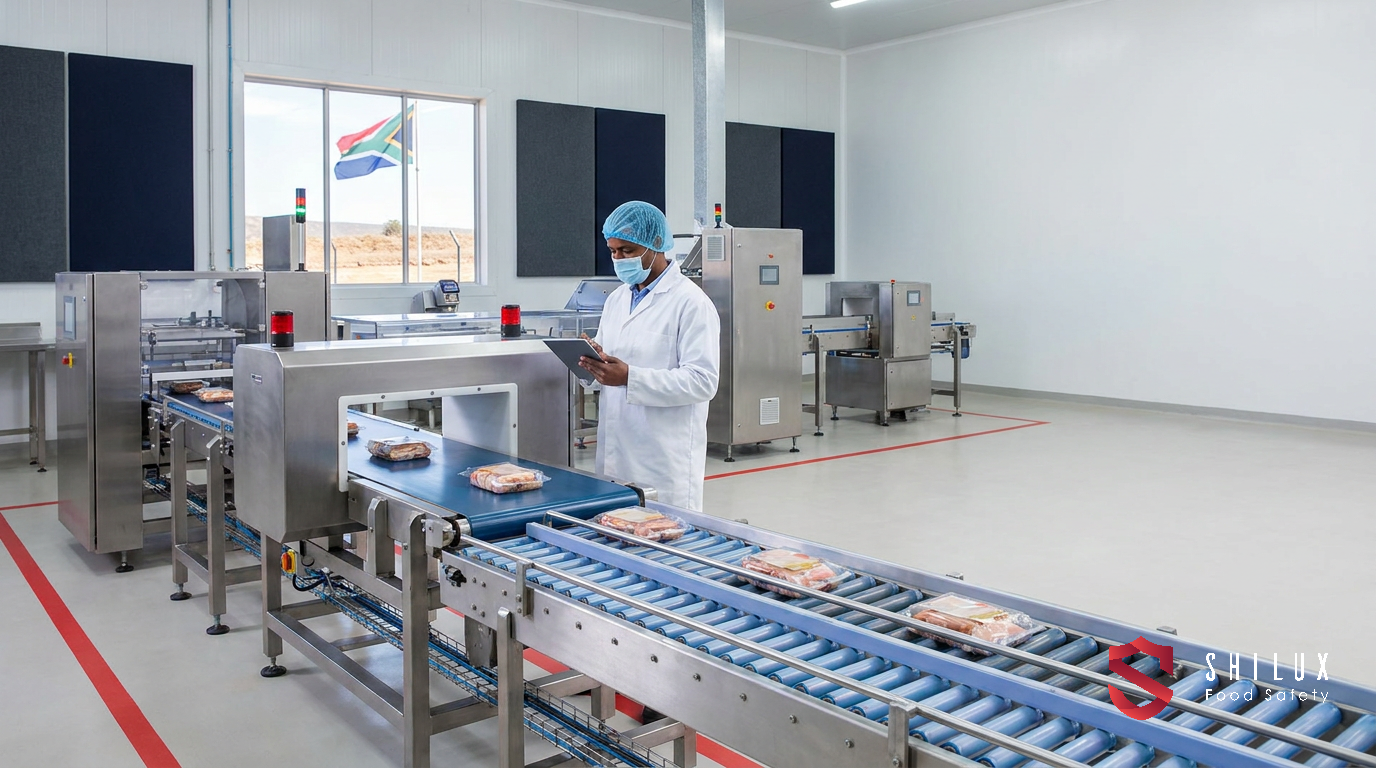
The Persistent Challenge of Physical Contamination
Foreign matter complaints continue to rise because of a widening gap between advanced detection technology and the declining rigour of fundamental Prerequisite Programmes (PRPs), particularly in maintenance and supplier oversight. While South African manufacturers invest heavily in X-ray and metal detection, these remain lagging controls that cannot compensate for failures in root cause analysis and a deteriorating food safety culture on the factory floor.
Key Takeaways
- Physical contamination is a primary driver of common food recall causes in South Africa.
- Maintenance-induced contamination remains the highest risk factor in ageing production facilities.
- Regulatory compliance under R.638 necessitates strict physical hazard control, yet many SMEs struggle with effective implementation.
- Technology is a secondary line of defence; the primary defence is a robust food safety culture.
- Supplier-derived foreign bodies are increasing as global supply chains face economic pressures.
The Regulatory and Certification Context
In South Africa, the legal baseline for food safety is defined by the Foodstuffs, Cosmetics and Disinfectants Act 54 of 1972. Specifically, the R.638 Regulations governing general hygiene requirements for food premises and the transport of food mandate that food must be protected against contamination. A failure to manage foreign matter is not just a quality issue; it is a direct breach of the conditions required to maintain a Certificate of Acceptability (CoA).
Beyond the law, GFSI-benchmarked standards like FSSC 22000 requirements and BRCGS Issue 9 place heavy emphasis on physical contaminant control. These standards require not just detection, but active prevention through risk-based prerequisite programmes (PRPs). When complaints rise, it signals that the HACCP plan is failing at the preventive stage, often due to a lack of meaningful HACCP verification and validation.
Legal vs. Voluntarily Audited Standards
It is vital to distinguish between the South African food safety regulations and commercial standards. A local municipality health inspector checking for a CoA under R.638 focuses on the facility's ability to prevent "any substance which may render the food harmful or injurious." In contrast, a BRCGS certification audit looks for detailed trending, documented environmental health practitioner interactions, and a deep-seated food safety culture metrics strategy. Failure to comply with R.638 can lead to a business being shut down legally, while failing a GFSI audit usually results in losing retail contracts.
Why Technology Isn't Solving the Problem
Many South African QA managers report that even with new metal detectors, complaints regarding plastic, wood, and non-ferrous materials are increasing. This is largely due to the "Detection Trap" — the belief that end-of-line screening can replace front-line prevention. Physical contaminants often enter the stream in forms that technology cannot easily see (e.g., clear soft plastics, insects, or thin gaskets) or at points after the final detection step.
1. The Maintenance-Hygiene Gap
One of the most common findings in GMP audits is "maintenance-induced contamination." This occurs when engineering teams perform repairs without adequate post-maintenance cleaning or tool reconciliation. In the rush to meet production targets, loose nuts, washers, and metal filings are frequently left behind. Without specific food safety training for maintenance staff, the engineering department often remains a significant source of physical risk.
South African facilities often face the challenge of ageing infrastructure. In these environments, "temporary" fixes involving cable ties, duct tape, or wire often become permanent. These are major sources of foreign matter. A proper facility layout and a dedicated maintenance workshop schedule are essential to prevent the "fix-as-you-go" mentality that leads to contamination.
2. Economic Pressures and Supplier Quality
As manufacturers look to cut costs, they may switch to lower-tier suppliers. This often introduces foreign matter into the facility via raw materials. A rise in stones in agricultural products or staples in bulk-packed ingredients is a direct result of poor supplier management. If your supplier approval process does not include physical hazard risk assessments, you are essentially importing foreign matter complaints into your facility.
A high-risk scenario currently seen in the South African industry is economically motivated adulteration, where fillers are added to raw materials. While often a chemical or authenticity risk, this can manifest as physical hazards, such as sand or ground-up packaging being present in bulk powders. Effective supplier audit checklists must include a verification of how the supplier manages their own waste and physical hazards.
3. The Human Factor: Food Safety Culture
Foreign matter prevention is 90% behaviour. If a worker sees a broken pallet or a chipped plastic bin and does not report it, the system has failed. Many facilities suffer from food safety culture problems where production speed is prioritised over the integrity of the environment. When staff are not empowered to stop a line due to a potential physical hazard, complaints are the inevitable result.
To improve this, companies should focus on food safety culture leadership, ensuring that middle management supports operators who identify hazards. A simple food safety culture questionnaire can often reveal that staff are afraid to report "near misses" regarding foreign bodies for fear of disciplinary action, which is a significant barrier to improvement.
Common Sources of Foreign Matter in SA Facilities
| Contaminant Type | Common Source | Prevention Strategy |
|---|---|---|
| Metal | Worn machinery, loose fasteners, staples | Preventive maintenance and tool control |
| Hard Plastic / Glass | Light fittings, equipment guards, scoops | Monthly glass and brittle plastic audits |
| Wood | Pallets, brush handles | Wood-free zones in high-care areas |
| Pests | Ineffective screening, open doors | Integrated Pest Management (IPM) |
| Personal Belongings | Jewellery, pens, buttons | Strict PPE policies and pocket-less overalls |
| Cleaning Equipment | Scrubber bristles, scourer pieces | Visual inspection of cleaning tools post-use |
Operational Detail: Implementing a Physical Hazard Control Plan
To effectively manage these risks, a facility must go beyond the basic HACCP plan and implement specific operational controls. This is often where the difference between ISO 22000 vs HACCP becomes clear, with ISO requiring more integrated management system controls.
Glass and Brittle Plastic Policy
A standard requirement in food premises requirements in South Africa is the total control of glass. A register must be maintained for all glass and brittle plastic in the facility. This is not just a list; it is a live document used for monthly inspections. If a light cover is found cracked, it must be logged as a major vs minor nonconformity depending on its proximity to open products.
Metal Detection and X-Ray Protocols
Detection equipment is only as good as its validation. A common failure mode is using test pieces that are too large or failing to test at the start, middle, and end of production runs. Facilities should follow the HACCP verification and validation process to ensure that the detection sensitivity is appropriate for the product density and packaging type.
The Failure of Root Cause Analysis
Complaints rise when a facility treats each incident as an isolated event rather than a symptom of a systemic failure. If a customer finds a piece of blue plastic and the only action taken is a "toolbox talk" reminding staff to be careful, the problem will recur. Effective root cause analysis must dig deeper: Why was the plastic there? Why did the pre-op inspection fail to see it? Why did the detection equipment not reject it?
"A correction fixes the immediate problem; a corrective action (CAPA) ensures it never happens again by addressing the underlying system failure."
Without a robust CAPA process, manufacturers find themselves in a loop of recurring complaints, leading to brand damage and potential regulatory action from the Department of Health or the NCC. Using tools like the 5 whys explained or a fishbone diagram explained can help the food safety team move past superficial explanations.
Common CAPA Failure Modes
- Blaming Human Error: Attributing every foreign body to "operator negligence" without looking at the design of the task.
- Lack of Verification: Closing a CAPA without verifying that the new sieve or magnet is actually being checked by staff.
- Inadequate Investigation: Not involving the engineering team when metal fragments are found.
For more guidance, see our common CAPA mistakes article.
Practical Checklist for Foreign Body Management
- Tool Reconciliation: Are engineers required to sign tools in and out of the production area? Use a visual shadow board for quick checks.
- Knife/Blade Control: Is there a formal register for snap-off blades (which should be banned) and utility knives?
- Sieve/Filter Integrity: Are sieves checked daily, and are those checks recorded with a signature? Ensure the mesh size is appropriate for the hazard being removed.
- Magnetic Separation: Are magnets pulled and cleaned regularly, with the captured material analysed for wear patterns?
- Supplier Audits: Does your supplier audit checklist specifically address how they manage physical hazards in their own process? Look for their own sieve and magnet records.
- Wood Control: Are all pallets in production areas plastic or heat-treated, and are they inspected for splinters?
- Personal Effects: Is there a strict policy against bringing personal items (cellphones, coins) into the high-care area?
How to Reverse the Trend
To reduce foreign matter complaints, South African manufacturers must move beyond basic compliance and focus on operational excellence. This starts with a thorough internal audit that looks for evidence of risk, not just proof of cleaning. It requires training that moves beyond the QA office and into the maintenance workshop and onto the factory floor.
Furthermore, digital systems can help identify trends that paper-based systems miss. By tracking the exact location and type of every foreign body find (even those caught internally), a food safety manager can identify a failing bearing or a degrading conveyor belt weeks before it results in a consumer complaint. Transitioning to digital food traceability allows for faster response times when contamination is detected.
The Role of Traceability
When a complaint does occur, traceability is your best tool for limiting the damage. You must be able to link the contaminant to a specific batch, time, and line. If your batch traceability is weak, you may be forced into a massive food recall vs withdrawal decision that could have been avoided with better data.
A successful mock recall should include a physical contaminant scenario. Can you identify all products manufactured while a specific machine part was missing? If the answer is no, your traceability records need urgent attention. Integrating a traceability flow chart into your SOPs ensures everyone knows their role during an incident.
Audit and Documentation Practice
During a hygiene audit, the auditor will look for "objective evidence." This means that simply saying you have a glass policy is not enough. You must show the completed BRCGS audit checklist or your own internal monthly inspection logs. Documentation should be contemporaneous—recorded at the time of the check, not filled in at the end of the week. Failure in documentation is one of the common food safety audit findings that leads to non-conformance.
Managing foreign matter is a continuous battle against entropy. As machines age and personnel change, the risks increase. The only solution is a robust, lived management system that values prevention over detection. Whether you are aiming for HACCP for food manufacturers in South Africa or an international certification, the fundamentals of physical hazard control remain your most important safeguard.
Shilux provides comprehensive support for manufacturers struggling with recurring contamination issues. From foreign body management training to implementing the QMSURE paperless quality system, we help you transition from reactive firefighting to proactive prevention. Contact our food safety consulting team to schedule a gap audit or a root cause analysis masterclass for your team.