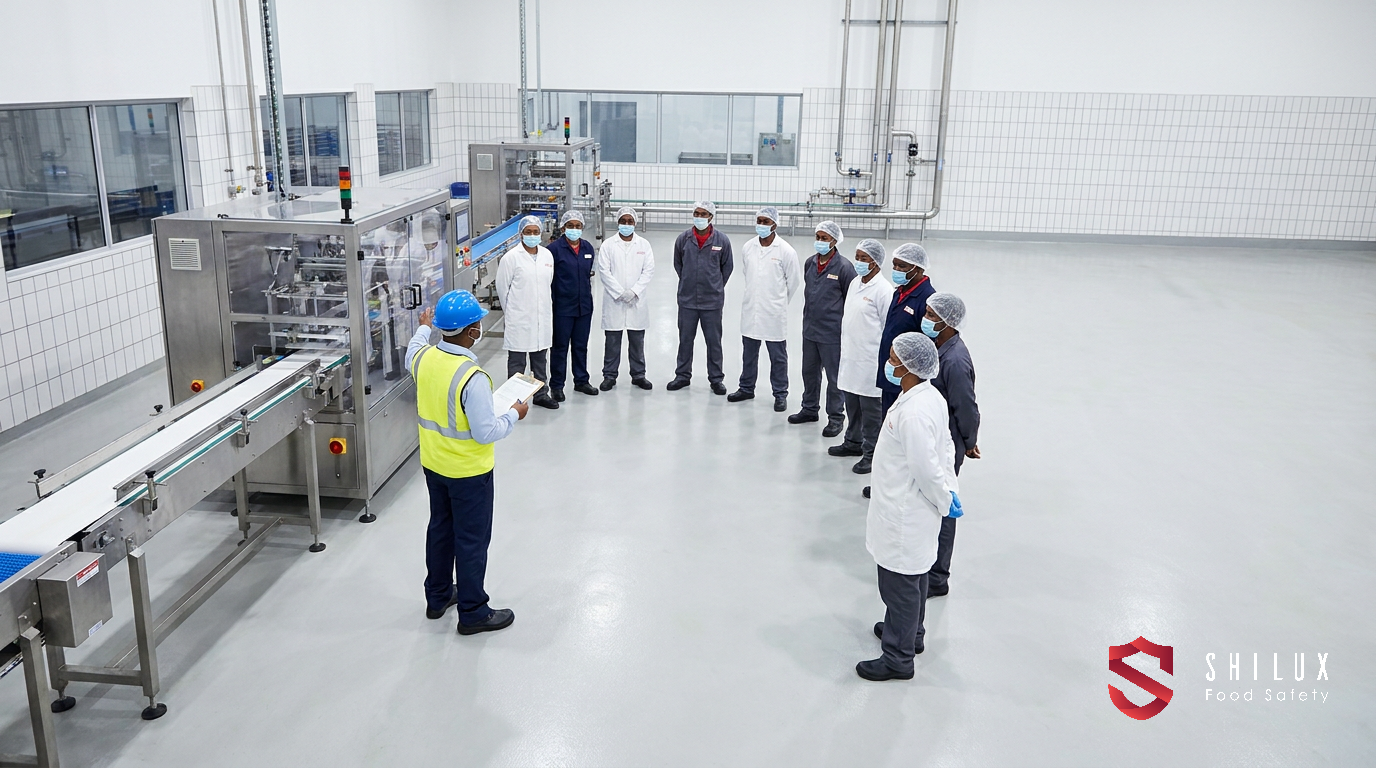
Effective toolbox talks for food manufacturing teams are short, 5-to-10-minute targeted briefings designed to reinforce specific food safety behaviours, Good Manufacturing Practices (GMPs), and regulatory requirements directly on the factory floor. These sessions bridge the gap between formal annual training and daily operations, ensuring that food safety remains a conscious priority for every operator, packer, and technician.
Key Takeaways
- Regulatory Compliance: Toolbox talks help meet the ongoing training requirements stipulated in R.638 and GFSI-benchmarked standards.
- Frequency Matters: Short, weekly sessions are more effective for retention than infrequent, long-form lectures.
- Evidence is Mandatory: Documentation of attendance and the specific topic covered is essential for audit readiness.
- Focus on Behaviour: Successful talks address "why" a rule exists, not just "what" the rule is.
- Active Participation: Engaging the team with demonstrations or questions improves knowledge transfer compared to passive listening.
The Strategic Importance of Toolbox Talks in South African Food Facilities
In the South African regulatory landscape, the Foodstuffs, Cosmetics and Disinfectants Act 54 of 1972 and its associated regulation R.638 (Regulations Governing General Hygiene Requirements for Food Premises, the Transport of Food and Related Matters) place a clear obligation on the Person in Charge. Under R.638, the Person in Charge must ensure that food handlers are adequately trained in food hygiene. While formal induction is a starting point, toolbox talks provide the necessary reinforcement to maintain the standards required for a Certificate of Acceptability.
Beyond legal minimums, for facilities pursuing or maintaining FSSC 22000 certification in South Africa or BRCGS, toolbox talks are a critical component of a robust food safety culture. They demonstrate to auditors that food safety communication is continuous and inclusive, rather than a once-a-year box-ticking exercise. In a high-pressure production environment, these talks serve as a mental "reset" button, bringing the focus back to product integrity before the shift begins.
Designing Your Toolbox Talk Programme
A common mistake in many South African SME food businesses is treating toolbox talks as an ad-hoc reaction to a problem. If you only speak to the team when a batch is contaminated, the sessions become associated with discipline rather than prevention. Instead, a proactive programme should be scheduled and structured. A well-maintained audit programme will often highlight recurring minor lapses that are perfect candidates for toolbox talk topics.
1. Topic Selection Based on Risk
Topics should be drawn from your HACCP plan, recent internal audit findings, or seasonal risks (such as increased pest activity in summer). Don't try to cover the entire ISO 22000 standard in one morning. Focus on one specific micro-topic, such as:
- The correct way to wash hands (demonstrating the 20-second rule).
- Why blue plasters are used and how the metal detector reacts to them.
- How to identify and report signs of cockroach or rodent activity.
- The difference between cleaning (removing visible dirt) and sanitising (killing microbes).
- Proper storage of personal items to prevent cross-contamination.
- Correct procedure for handling a dropped product to prevent common food safety audit findings related to floor contact.
2. The "Show, Don't Just Tell" Method
Food manufacturing is a physical environment. Use props. If you are discussing foreign body management, bring a damaged pallet or a chipped plastic tool to the meeting. Show the team exactly what a hazard looks like. This makes the risk tangible and easier to remember when they return to the line. For example, show a worn gasket and explain how it could fragment into the product, leading to a food recall. Visual evidence helps bridge language barriers and clarifies technical expectations immediately.
Operational Detail: A Sample 8-Week Rotation
To maintain consistency, QA Managers should develop a calendar that ensures all prerequisite programmes (PRPs) are covered over the course of the year. This prevents the "topic fatigue" that occurs when the same two issues are discussed every week.
| Week | Topic Category | Specific Focus | Operational Goal |
|---|---|---|---|
| 1 | Personal Hygiene | Jewellery & Uniforms | Zero incidents of loose items on the line. |
| 2 | Chemical Control | Correct Dilution Rates | Prevent chemical residues on food-contact surfaces. |
| 3 | Allergen Management | Colour-coded Utensils | Prevent cross-contact during product changeovers. |
| 4 | Waste Management | Internal Bin Liners | Keep floor areas clear of debris and potential pests. |
| 5 | Traceability | Label Accuracy | Ensure batch traceability is maintained through correct coding. |
| 6 | Maintenance | Temporary Repairs | Eliminate the use of string or tape as permanent fixes. |
| 7 | Food Defence | Access Control | Reinforce visitor management and external door security. |
| 8 | Microbiology | Listeria Controls | Emphasis on dry-cleaning zones and drain sanitation. |
Deeper Dive: Why Behavioural Change Fails
Understanding the "why" is the foundation of food safety culture excellence. In many South African facilities, operators follow rules to avoid a disciplinary hearing, not to protect the consumer. This is a fragile state; as soon as supervision is relaxed, the behaviour reverts.
To fix this, toolbox talks must connect the task to the consequence. Instead of saying "don't wear watches," explain that a watch pin falling into a meat grinder can result in metal fragments in a child's school lunch. This emotional connection to the end-user is a powerful driver of compliance. If your site has identified CCP examples like metal detection or pasteurization temperatures, use the toolbox talk to explain what happens biologically when those limits are breached.
Documenting for Audit Readiness
In the world of food safety auditing, "if it isn't written down, it didn't happen." Whether you are preparing for a GMP audit or a high-stakes retail audit, your toolbox talk records must be impeccable. Each record should include:
- The date and time of the talk.
- The name of the presenter.
- The specific topic covered (e.g., "CCP 1: Temperature Monitoring" rather than just "Safety").
- A list of attendees with their signatures (or digital verification).
- A brief note on any questions asked or issues raised by the staff.
Using a digital system like QMSURE can significantly reduce the administrative burden of tracking these records across multiple shifts and departments. Digital logs also allow for easy retrieval during a readiness audit, proving that training is a continuous process rather than a panicked activity before an external visit.
The Role of Supervisors
While the QA Manager often designs the content, the production supervisor is often the best person to deliver the talk. They have the direct respect of the team and understand the immediate pressures of the line. However, supervisors must be trained on how to lead these discussions. If a supervisor rushes through the talk as a nuisance, the team will mirror that attitude, damaging the facility's food safety culture metrics. Supervisors should be encouraged to use the 5 Whys technique during talks to help staff investigate why a certain procedure might be difficult to follow.
Refining Communication for South African Teams
South African food manufacturing floors are diverse, with team members often speaking different home languages. A highly technical talk in complex English may be ineffective. To ensure true understanding:
- Use visual aids (photos of your own facility, not stock photos). Show the actual red bin used for waste versus the green bin used for rework.
- Encourage peer-to-peer translation if necessary to ensure nuances aren't lost.
- Ask open-ended questions like "Where in our line could this specific hazard occur?" to check for comprehension.
- Keep the tone positive. While the risks are serious, the goal is to empower the team to be the first line of defence.
- Discuss food fraud examples in a way that relates to everyday shopping, making the concept of food authenticity relevant to their lives.
Linking Toolbox Talks to Root Cause Analysis
When a non-conformity occurs, the immediate reaction is often to "retrain the staff." However, formal retraining takes time. A toolbox talk is the perfect tool for immediate corrective action. If an internal audit reveals that hand wash stations are being bypassed, a targeted talk the next morning addressing this specific audit finding can prevent the issue from escalating. This demonstrates to auditors that the site uses root cause analysis to drive practical, real-time improvements.
Furthermore, when performing a traceability exercise, if a gap is found in the paperwork, a toolbox talk can immediately address the importance of traceability records with the specific operators responsible for that section of the line. This ensures the CAPA process is closed effectively and the lesson is learned by those at the coalface.
Common Pitfalls and How to Fix Them
"We don't have time for talks today, we have a big order to get out."
This mindset is the biggest threat to food safety. Skipping a 5-minute talk to save time often leads to a 5-hour cleaning stand-down later when a preventable hygiene error occurs. Other pitfalls include:
- Information Overload: Trying to cover five topics at once. Stick to one clear message per session.
- The "Lecturing" Tone: Talking at people rather than with them. Turn the talk into a huddle.
- Ignoring Feedback: If a staff member points out that they can't follow a rule because a tool is broken, and you don't fix the tool, they will stop listening to future talks. Note these issues in your CAPA template and report back once fixed.
- Inconsistency: Doing them every day for a week and then stopping for a month. A predictable schedule is better than a frequent but erratic one.
- Lack of Variety: Repeating the same talk every week. Use a rotation to keep content fresh and relevant to the specific industry sector you operate in, whether it be dairy or meat and poultry.
Conclusion
Toolbox talks are not just a line item on a training matrix; they are a vital heartbeat for any food manufacturing facility. By keeping sessions short, relevant, and well-documented, South African manufacturers can ensure compliance with R.638, satisfy GFSI audit requirements, and—most importantly—protect the consumer from foodborne hazards. When the team understands the 'why' behind the 'what', food safety moves from a set of rules to a shared value. This transition is essential for any business aiming to achieve BRCGS certification or improve its overall food safety culture assessment scores.
At Shilux, we help food manufacturers transform their compliance from a burden into a competitive advantage. Whether you need expert training and education consulting to develop your curriculum, or you are looking for a paperless QMS to track your food safety culture activities, our team is ready to support your journey. Contact us today to discuss how we can help you build a more resilient food safety system through targeted internal audits and robust management practices.